
Pathfinder Professional Narratives is an ongoing series illuminating the career journeys and experiences of Research Professional Staff. You can see all of the posts in the series here.
This post is written by Dr Mads Gabrielsen, Technical Lead in the Neil Bulleid Integrated Protein Analysis Facility, University of Glasgow. Read more about the facility on Dr Gabrielsen’s professional web pages.
Relevant academic and professional qualifications: Siv.Ing. (Civil Engineer) Biotechnology (University of Tromsø, Norway, 2000), PhD Biochemistry (University of Dundee, UK, 2004).
Approximate salary bracket for this type of role: £50,253 to £58,225
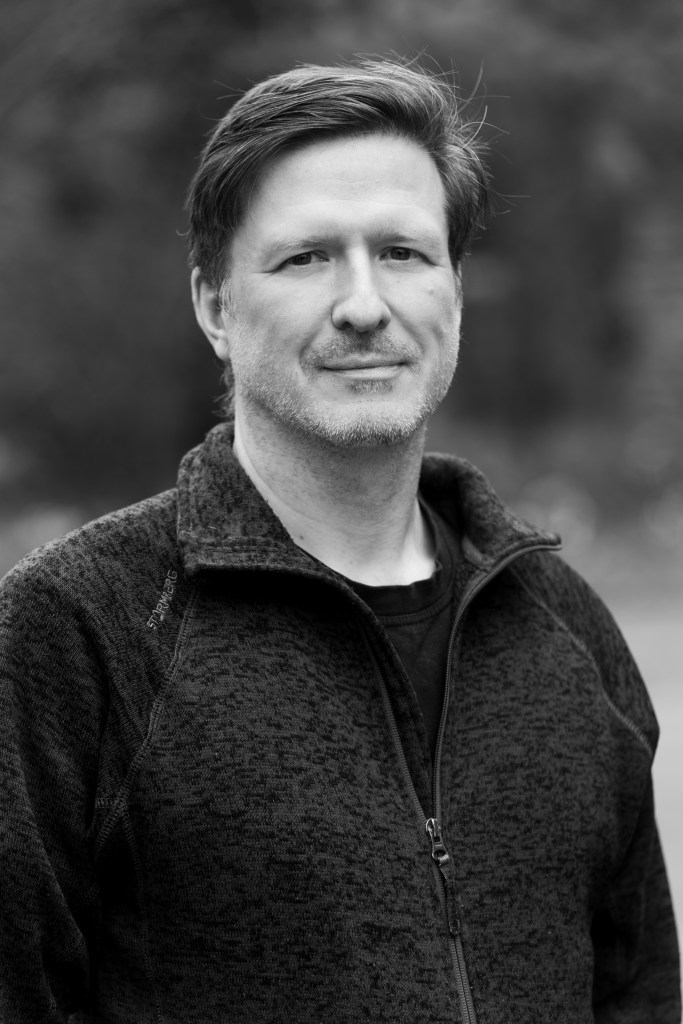
I was in the latter part of my undergraduate degree at my hometown University in Norway, when I did a course in protein structures which finally brought into focus what I wanted to spend my time studying. During my time I’d realised that I would like to go somewhere outside of Norway to finish my studies, and as a post-doc from the University of Tromsø was visiting Dundee for a year, we managed to organise that I could become a visitor in the lab of Steve Keyes at Ninewells hospital for 9 months to do exciting new lab-work looking at protein-protein interactions, but no structural methodology.
Whilst there, I realised that I wasn’t quite ready to move home yet, and that I really wanted to look at protein structures, in particular using what is called x-ray crystallography. I started contacting academic labs in Dundee and area around to see what opportunities were available. One PI invited me to come and have a chat and a cup of coffee, and I left his office with an offer of a role as a Research Assistant and PhD student in his lab. My PhD was focused around x-ray crystallography and was exactly what I wanted to do. I also got the chance to learn some other biophysical methods as well as doing lots and lots of protein purification.
After finishing my PhD I started working as a post-doc at Glasgow University, working on membrane proteins, and attempting to crystallise these. I then met a microbiologist who had recently moved to Glasgow and we wrote a grant with me as a named post-doc. I learned a lot about virulence and microbiology, but it became clear to me that my first solution to any problem was to try to crystallise the protein and determine the structure, and that to me the methodology was much more interesting than the scientific question.
When the grant ran out, we were unsuccessful in getting more money, and I spent six months as a Visiting Scientist at the University of Glasgow, trying to write fellowship applications and apply for researcher jobs at other institutions. I had a few interviews, but it didn’t lead to anything, and money was getting tight as I did not have a salary. An opportunity arose at the CRUK Beatson Institute (now the CRUK Scotland Institute) and I started working as a post-doc for a group leader who was interested in using structures do understands mechanisms of ubiquitin transfer in cells. I spent most of my time purifying proteins and crystallising proteins. By now I had quite a lot of publications, all focused around methods, rather than biology. There were cancer related biology, viruses that attack giant Malaysian prawns, secretion factors involved in stomach bugs, as well as proteins from parasites causing Malaria and similar diseases. When the end of my post-doc came, I was asked if I wanted to continue working as a Principal Scientific Officer, and I am now the technical lead of a research facility at the University of Glasgow, which focuses on x-ray crystallography and biophysics and have been since 2021.
Initially I had no real plan as to what I wanted to do for my career, but I expected I would follow the traditional academic pathway with a PhD, a post-doc or two, an idea for a fellowship and finally end up as a professor somewhere. However, the research ideas never came, but the methodological ideas did. I spent my time focusing on methods, method development and contributing to the field of protein structure. There was never really any advice on how to get to where I am but this was what I wanted to do and I feel incredibly lucky that I can work only on the things I find interesting (at least scientifically).
I do not of course spend most of my time doing science as a facility lead. There are a lot of meetings with facility users, which is great as I get to discuss new science and new projects on a weekly basis. There are also management tasks, looking for funding for new or old equipment, and balancing the books. Additionally, I spend some of my time involved with the Technician Commitment at UofG. Most of this was new to me and learned on the job, but I have had some fantastic mentors throughout my career, which has been particularly helpful when it comes to learning people skills and developing as a manager. In particular I always carry with me two pieces of advice, one from my PhD supervisor and one from my first line manager when I started managing people.
The first piece is that shared glory is not diminished glory. Everyone who has contributed to a manuscript should be on it, even if the contribution doesn’t seem as outstanding as the lead author’s work. Expressing and purifying proteins for example, can be time consuming, require a lot of optimisation, and is most definitely a skill. I always aim for the people working in my facility to get the recognition they deserve.
The second piece is to learn when is it a me problem and when is it a you problem. Feelings, senses, and reactions towards others all come from me, and not from the other person. Understanding this, the concept of separating what I can change through my own thoughts and behaviours, and what needs to change from the outside has been very useful to me as I develop as a manager, dealing with people both above and below me in the system. Particularly as the College and University has gone through changes and reorganisations, there has been a sense of anxiety and lack of trust amongst staff. Understanding that where these feelings arise from, both in myself and in others, have made me better at navigating these changes, and to try to influence my peers and reports, as well as my line managers and above.
I don’t know that I can advise someone on how to get a job like mine. I think there is a lot of room in the technical family for people like me, with an academic background, but who have not necessarily found their place in traditional academia. I think a focus on methods and technology is essential to research for both delivery and innovation, and it seems that the funding bodies are beginning to appreciate the work we do, and the skills and knowledge we possess.
It still feels like there is a bit of snobbery around being an academic, and that research technical professional careers are seen as a second-best option, but this does seem to be changing slowly. I found in the end that the hardest person to convince was myself, as it did feel like I was giving up on an undefined dream. However, after a period of time where I allowed myself to ‘mourn’ that missed dream, I am now in a position which suits me very well, and which I am actually suited for. I have never really had a career path, more a meandering through the career landscape, but I have ended up, for now, in a place where the view is pretty great.

