
by Vhairi Sophronia Wilde, PGR Intern for Good Research Practice in the Research Culture and Researcher Development Team, and first-year PhD candidate in Sociology, researching menstrual experiences in rural Scotland
I’m seven months into my PhD and five months into a PGR internship. In this blog, I reflect on my experience as a new PGR intern, and how it has shaped my sense of belonging, values, and identity as a researcher.
Starting a new chapter
Having spent five years at my previous university, the transition to the University of Glasgow felt like stepping into an entirely new chapter. Gone were my friends, the familiar staff and the buildings I knew so well. I arrived with a solid academic foundation in law and policy, and a breadth of experience across the public, private and third sector.
Despite my assurance, I remember walking onto campus for my PGR induction, taking in the grand architecture and feeling a pressure to excel during my time here. Many students and scholars had walked these paths before me, and now I was joining them.
In the weeks and months that followed, I met esteemed academics who are leaders in their fields, socialised with fellow PGRs pursuing novel and ambitious research and attended workshops and guest lectures delivered by brilliant minds. Everywhere I turned, people seemed to speak with effortless confidence. They were articulate, assured and certain of their place in this academic world.
Feeling like a small fish
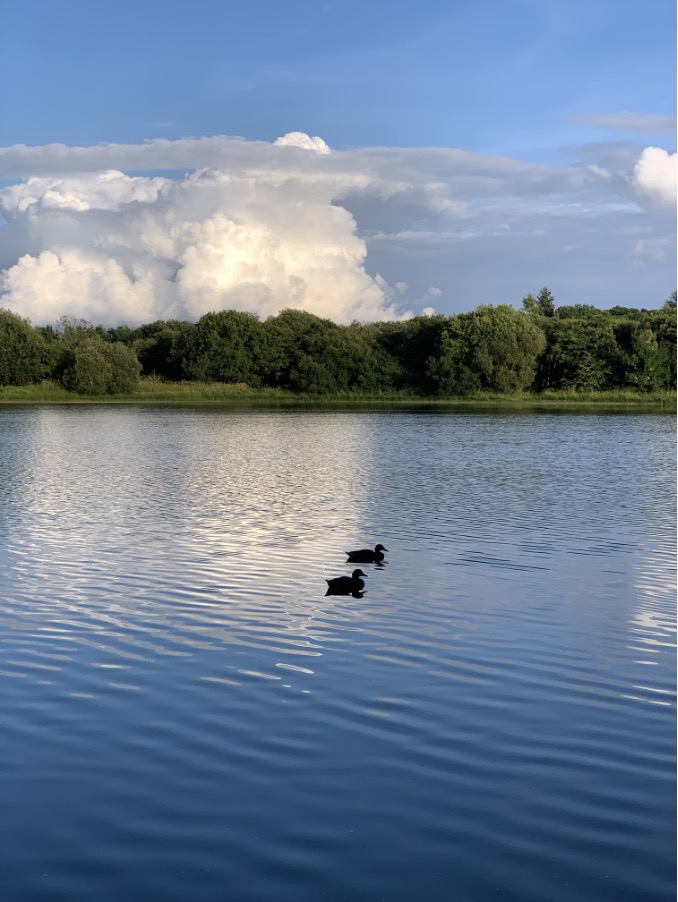
Amid all of this, I found myself returning to the same quiet, persistent feeling: I was a very small fish, in a very large pond. Admittedly, I struggled with this feeling. I’m not from an academic family, I’m new to the study of sociology, and I’m researching an emerging field that few fellow PGRs are familiar with. At times, I questioned whether I belonged in the water at all.
With the hope of feeling better connected to the University, I decided to apply for a PGR Internship. Building upon my budding interest in research, I successfully applied for the role of Good Research Practice Intern in the Research Culture and Researcher Development Team (RC&RD).
This was similarly daunting. My colleagues were kind and welcoming, but everywhere I looked, someone seemed to have an enviable depth of expertise. I remember sitting in early meetings thinking, Is everyone else fluent in this language? Was there a manual I somehow missed? Even the acronyms felt like a dialect!
But then my work began.
DORA: More Than a Policy
My first task was to systematically audit the University’s hiring and promotions polices in line with the San Francisco Declaration on Research Assessment (DORA) and UofG’s DORA Working Group.
At first, it seemed like a straightforward task. I created a sophisticated excel spreadsheet, retrieved and reviewed policies and identified alignment and gaps. Drawing upon my background in law and policy, this type of project felt familiar and achievable. Yet, as I dug deeper into the principles of DORA, something unexpected happened. The technical task started to feel like a much bigger conversation. A conversation about values, identity and what it means to be a researcher in the first place.
DORA is, at its core, about quality and fairness. It challenges the idea that research excellence can be reduced to a number or metric. It asks institutions to look beyond traditional output types towards recognising the full breadth of contributions that researchers make. It is about contextualising research, recognising quality and valuing all forms of high-quality research.
As I read, and re-read the policy documents, I found myself thinking about the people behind them. New PGRs shaping their projects, researchers building networks, lab technicians offering expertise, supervisors investing in new scholars, senior staff guiding and mentoring and professional service staff working across the research ecosystem. Suddenly the very large pond didn’t look quite so intimidating. It looked…human. A community of hard-working, talented individuals who also had to establish themselves and find their place.
Refocusing my values
During this time, I recognised that I had been focusing on the wrong thing. Instead of worrying whether I was good enough or knowledgeable enough, I should have been asking myself: what kind of researcher do I want to become? I believe that research is inherently collaborative as we rely on one another’s expertise, experience and support. These interdependencies are not weaknesses but rather the foundation of a healthy research culture.
The principles of DORA prompted me to reflect on my own values.
I value openness, not only in terms of open research, but in being transparent about who I am, what I bring and the realities of research. I value collaboration over competition. Research is a collective endeavour, not a race to accumulate the longest list of outputs. I value the recognition that quality takes many forms, and that some of the most meaningful contributions cannot be captured by a metric alone. I want to be the kind of researcher and colleague who shares these openly, while continuing to learn from those around me. Someone who contributes to the communities that I’m a part of, and someone who recognises that research is strengthened through this exchange.
These values are reflected in the people that I work with. My colleagues in Research Culture and Researcher Development generously share advice, support and encouragement. They support networks and communities, and nurture progressive ideas of collaboration, connection and community. Through them, I have come to realise that in the daunting waters of research, there are strong currents of community and support.
Swimming stronger
I still have moments where I feel like a small fish. I suspect that is part of the PhD experience, and perhaps part of the research experience more broadly. But I no longer feel like I’m swimming alone, or without direction. Over the coming months, I will be continuing my work on DORA with two additional remits:
- developing a suite of educational resources on DORA principles and Good Research Practice and,
- connecting with the Good Research Practice Network (GRPN).
I am excited to take my technical auditing work in a more practical direction and to help communicate DORA principles at the University and draw upon the expertise of the GRPN. Similarly, I feel better prepared to begin my fieldwork in the year ahead. To better understand my why, to act with integrity and know that if I need support, there are many communities I can turn to.
In closing, I may remain a very small fish in a very large pond. But I am beginning to recognise that even small fish have something to offer. I bring my own experiences, perspectives and values, shaped by the path I have taken to get here. Rather than feeling overwhelmed by the size and brilliance of the pond, I now feel energised by its possibilities. I’m learning to swim alongside others, drawing upon our shared experiences and expertise. As you move through these waters, which values help guide the way you swim?

