
By Dr Cole Collins, British Academy Early Career Researcher Network Scotland Cluster Project Officer
Starting from uncertainty
In November 2025, we held our annual celebration event for the Scotland Cluster of the British Academy Early Career Researcher Network (BA ECRN) at the V&A Dundee, which brings together delivery partners of the Network, British Academy Fellows, Network members and prospective new members to celebrate the achievements of the previous years. As part of this day we convened a panel to explore how the small pots of funding offered through the BA ECRN to its membership had enabled larger projects, more funding, or more generally had some impact on ECR careers. During the Q&A, a few members of the audience and the panel shared how the BA ECRN had provided a much-needed space for them to find success in the forms of small pots of funding, collaborations, mentorship, peer-review and even friendship. One member told how the BA ECRN had helped them get a job and thus maintain their visa; another told how they felt the BA ECRN had “saved their life”, giving them opportunities and support they hadn’t had before. I was genuinely struck by the openness, honesty and vulnerability shown in the room and remarkably that the room also held space for those struggling, allowing open reflection they clearly needed.
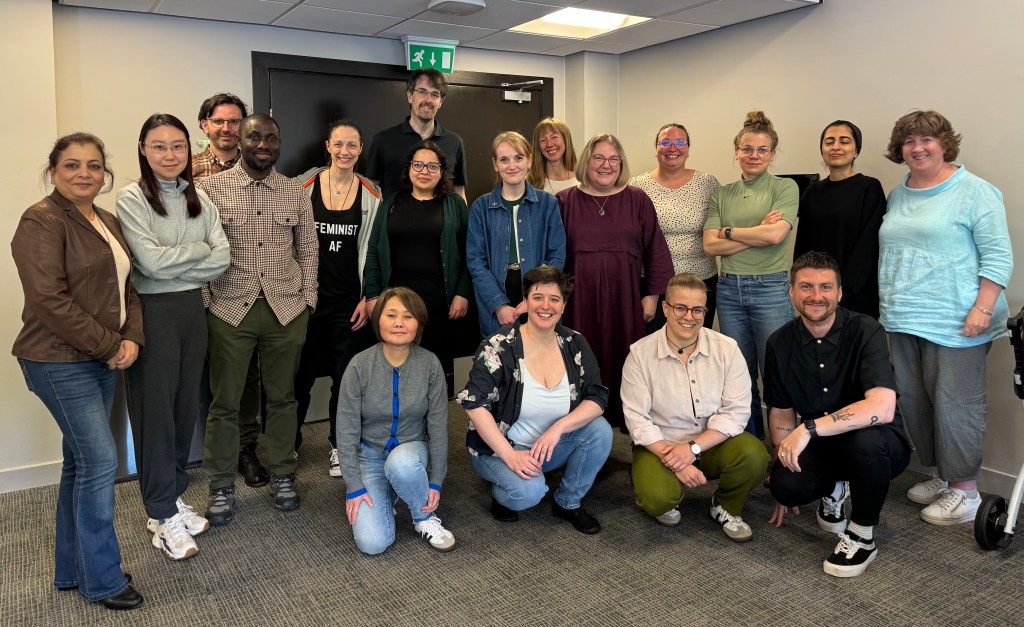
In all the personal stories shared privately and publicly across the day, a common theme emerged; transitions. Each person felt like they were in or responding to moments of flux – soon-to-be-ending contracts; waiting for funding and/or job application outcomes; promotions; when were they no longer an ECR; how would they navigate a role outside of academia; how would they get back into the academy – and thus anticipating a phase or period of transition. The unsettling nature of this, even for those in open-ended, full-time roles, stood out to me and set in motion the planning of what would become “Moving Along: Transitions In, Through and Out of Academia”. A two-day programme for members of the BAECRN at any point of transition, aiming to provide a mix of reflective, person-centred approaches and practical ways to work through transition phases, especially those moments when we can feel “stuck” or uncertain of which direction to take. Our aim was to provide a protected space for reflection on and sharing of experiences, to build a sense of collegiality across a seemingly disparate cohort of ECRs, based in different parts of the country and working across diverse subject areas.
Ways to reflect
After a period of reflection, I noted the main challenge around transitions, was not in fact the transition itself, but the discomfort that came from the feeling of uncertainty which came along with embarking on a transition. And so, I set out to have conversations with friends and colleagues about what we might need to enable and foster a safe space for people to share, be vulnerable, reflect and learn from one another. It started with making the decision not to offer any concrete advice on how to navigate transitions. These phases are often extremely personal to our own contexts and situations, and often generic advice or tools are unhelpful. This meant, whoever was going to co-deliver the programme with me, whichever facilitators came on board, didn’t offer one-size-fits-all solutions, and no promises were made as to helping to actualise their wishes after they had moved to the next phase. This positioning would require each participant of the workshop, then, to be entirely responsible for themselves. This felt antithetical to the Network’s ethos in Scotland, which has, since its beginnings, been a space for collaboration and cooperation. Therefore, we decided to add a layer of accountability, to build confidence and support each other, and through connection allay feelings of loneliness in these situation. To support this, we asked that those in the early stages of transition out of the ECR-phase of their careers, mentor those who were firmly in the early part of their ECR career.
Like a tandem bike – or working together to find your way
Moving Along was structured so that participants would receive workshops on different modes of reflection, including reflective writing; thinking through different cultural and linguistic ways of being as an advantage rather than a deficit; to identify the key challenges faced in the different career transitions they had experienced; a scoping exercise to think about the first ninety days of independent research; as well as a workshop which focused on building trust in the group. One of the most important parts of the two-day programme was the training on near-peer mentoring, which came before time with their mentor as a built-in part of the programme. This was important to reduce the pressure around connecting after the two days of workshops. It meant that life didn’t get in the way of having that first meeting, which is so crucial for setting the tone of mentorship.
Across the two days, participants were invited to think about their positionalities, their wants and needs, their strengths, their hopes, their failings and to share these openly in the space and to create an atmosphere of collegiality and community. We started the first day with an intention setting – to be present, to be kind, to be patient with ourselves and others, to be open, to listen actively and to share as much as felt comfortable. It was also an invitation to get comfortable with discomfort – probably the most challenging part of it all.
The programme was designed to move away from simply the practical and technical support of dealing with transitions, which, particularly for ECRs, is a tricky time and can constitute multiple transitions, sometimes prolonged periods of slow transition – but it was also a reminder that transitions are ongoing and happen continually throughout our careers.
An ongoing journey…
After the two days of workshops, I was grateful to the participants and facilitators for their openness, honesty and commitment to the programme. They engaged brilliantly with one another and with their own thoughts and feelings. The most profound comment from one participant at the end of the second day, was how important they felt it was to protect more time for reflection and thinking not only about the work, but about their careers. That the workshops provided this was only one of the many successes of the programme. Additional feedback from participants throughout the two days and in short email exchanges after intimated that they appreciated and valued the experience of and ability to share with others and to hear similar experiences reflected back from other participants and those in the room who were further on in their careers. The full evaluation of the programme is ongoing as the mentorship scheme is designed to last until June 2027, at which point participants (mentors and mentees) will be asked to write a short reflective piece on how the learning from the Moving Along programme and mentoring had been applied and/or if it had supported them through any particular transition moments.

