
Beth Dibnah, Specialist Equipment Technician, University of Glasgow
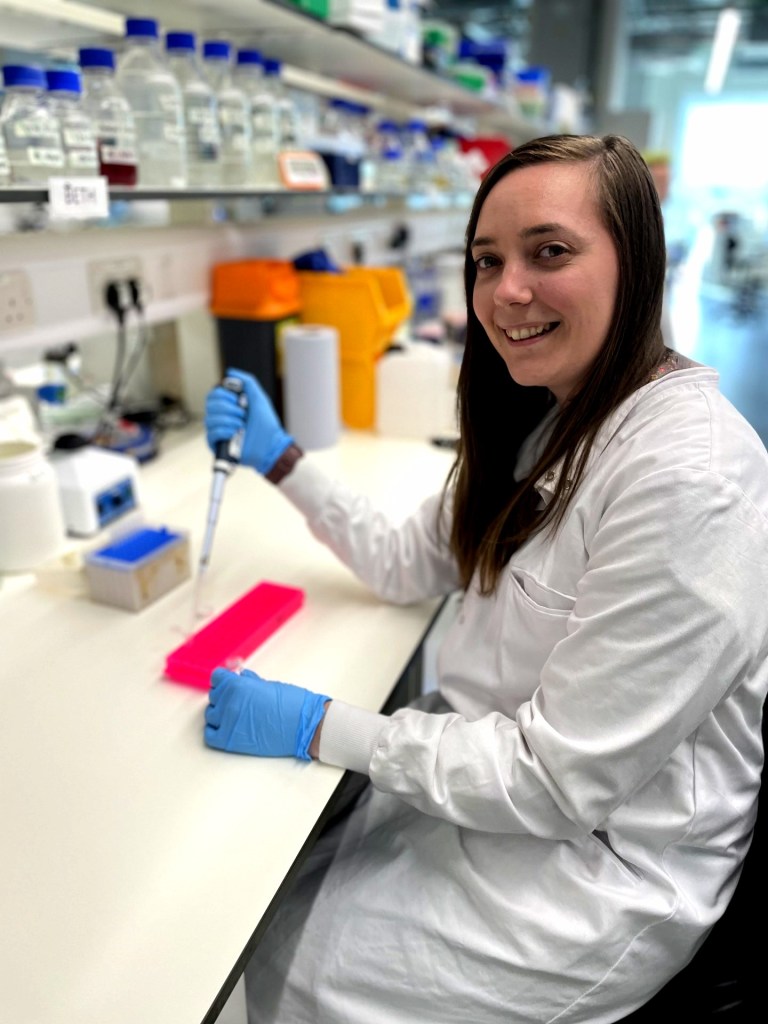
What do Lab Technicians do?
Have you ever wondered what technicians really get up to? Hopefully, this post will give you some insights into technical roles if this is still a mystery to you!
The University of Glasgow employs around 750 highly trained technicians across all colleges who contribute to vital research, training, and teaching. The job of a technician can vary greatly depending on the College or School, but we all have specialist knowledge and use our skill sets to solve problems. There are many routes to becoming a technician and career pathways vary.
My background
When people ask how I became a technician, I always tell them I accidentally fell into it. I completed my undergraduate degree in Biochemistry and Master of Research in Immunology, both at Newcastle University. I enjoyed my time working in labs and wanted to continue, but really did not like writing my thesis, so decided I did not want to complete a PhD.
A research technician position became available in the lab I did my masters project in so I decided to apply and got the job! I was so glad I did as this meant that I could continue in a career that I enjoyed.I have now been working as a technician for almost 7 years in various technician roles at Newcastle University and the University of Glasgow. Things changed for us during the COVID-19 pandemic, and a lot of non-essential labs were shutting down. I took the opportunity to volunteer to set up the Lighthouse Labs in Glasgow, and spent time setting up and testing protocols, ensuring health and safety documentation was in place, and eventually processing COVID-19 patient samples. This was a very stressful time, but I feel so proud that so many staff stepped up and volunteered to help.
So, what does my day-to-day look like?
One thing that I love about being a technician is that no two days are the same! In my previous role, a lot of my time was spent doing research, so I would be either planning, carrying out, or analysing experiments. I also managed the lab for my research group, then my role expanded to include lab management for three research groups. On a daily basis I worked on stock taking, ordering, lab inductions and improving the lab space for users. I also supervised and trained Undergraduate, Master’s and PhD students who were starting in the lab.
I am now part of the core support team at the Centre for Virus Research as a specialist equipment technician. Although I have not been in this role for long, I’ve done a lot of training on the specialist equipment for FACS, analytical technologies and protein chemistry. My day-to-day involves meetings to discuss equipment, maintaining and managing the equipment, speaking with reps, advising users and promoting the equipment.
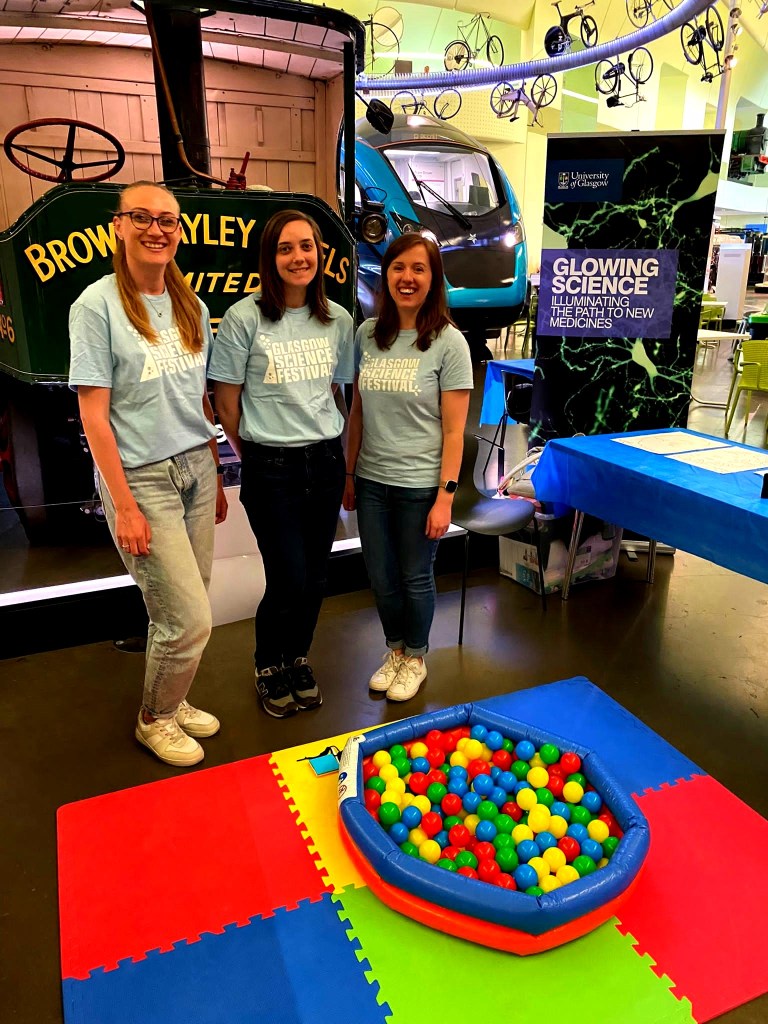
Technicians can also be involved in many things that fall outside of their job role, including participating in networks, sustainability groups, training programs (either attending or hosting), health and safety groups and outreach or public engagement activities. These are great to be involved in and help technicians develop skills in leadership, problem solving, organisation and communication which can then be applied to our roles.
Career pathways for Technicians
Technicians come under the technical and specialist job family at the university and there are many routes into this career. You could go down a university degree route such as myself or complete a PhD or a postdoc position. You can also start as an apprentice, learning on the job and working towards qualifications.
Once you are working as a technician, there is flexibility in the roles you can work in. For example, I have previously worked in immunology and pharmacology, and now I’m in virology. As a technician I’ve developed a range of transferable skills. As technicians progress, we tend to go down one of two routes – technical management or technical specialist. Technical management can involve progression as a lab management/lead technician, chief technician, head of technical operations or head of technical services, depending on the college you work in. The technical specialist route is still developing across the sector, but you would progress as a specialist in one area, becoming an expert.
Technician Commitment
The Technician Commitment is a UK-wide initiative to ensure visibility, recognition, career development and sustainability for all technicians in all disciplines working in higher education and research. The University of Glasgow became a signatory of the Commitment in 2017 and is currently in stage 3 which runs from 2024-2026. The stage 3 action plan includes a range of actions to cover the initiative and includes points such as:
- Hold events to showcase technical services available.
- Encourage nominations for award schemes to highlight the work done by technicians.
- Promote training opportunities to develop skills.
- Further develop technical career pathways.
Over the years, I have become more involved with the Commitment. Most recently, I volunteered as a technician champion for the Technician Commitment Champions Network and was elected as chair. This is a network of technical staff across the university that aims to share best practise and increase the acknowledgement and recognition of technicians.
I hope this article has given you some insight into what technicians get up to. There are probably a lot of other things that I haven’t mentioned, especially in different areas! Your additions are welcome in the comments.
 The Auditorium: a research culture and researcher development blog