
by Ashutosh Singh, Research Culture and Researcher Development Intern 2025-2026, funded by the Team UofG Together Fund and second-year PhD candidate in Sociology, researching intersectional inequalities in women’s health at the intersection of climate-related adversities and public health policies.
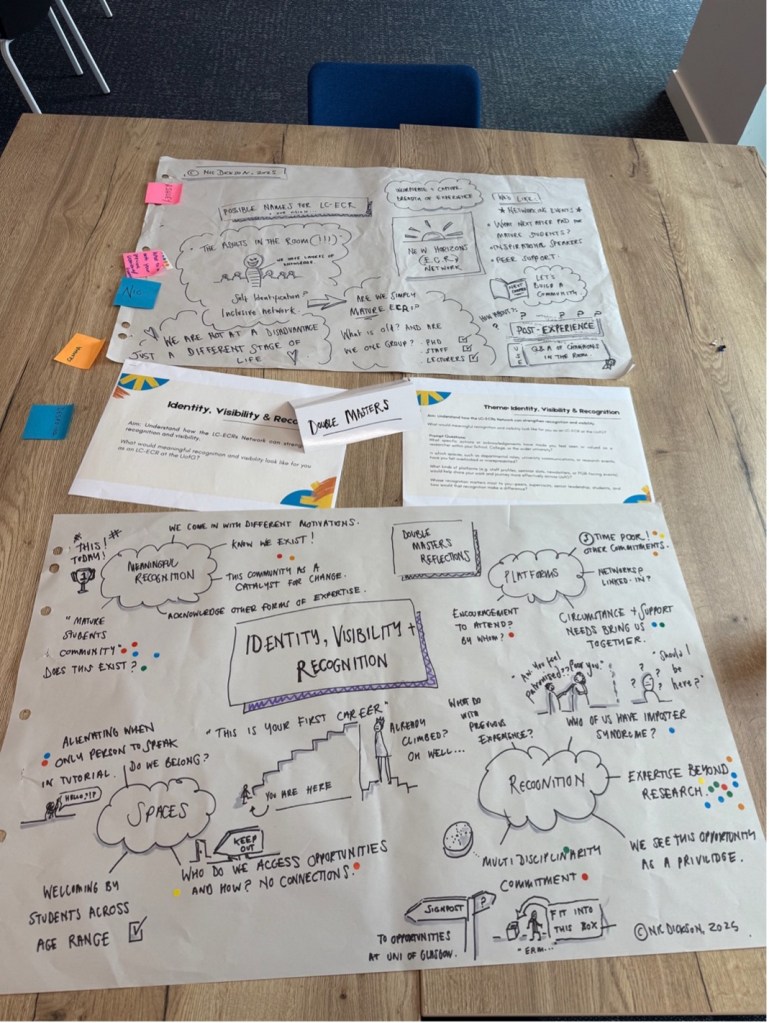
There is immense power in the connection and belonging found through a community or network. Communities and networks connect people around a myriad of shared experiences, identities and hopes. This blog posts tells the story behind the reinvigoration of one such network, the University of Glasgow Late Career-Early Career Researcher (LC-ECR) Network.
What is the LC-ECR Network?
The Late Career-Early Career Researcher (LC-ECR) Network was established for postgraduate researchers (PGRs) and Research Staff who have entered or returned to academia later in life, and those navigating extended periods in the early-career stage. It is a space for all researchers whose paths have not been linear and grounded in self-identification. At the University of Glasgow, all PGRs and Research Staff who recognise their experience in this description are invited to join. The Network offers peer support, community, visibility, and a collective voice, rooted in the values of inclusion, recognition, and belonging.
For those reading this outside of our researcher community at Glasgow, we hope to offer ideas for supporting researchers in your community who would benefit from connecting in this way.
Why it matters
From earlier work with this group, we know there is a clear need and interest for spaces where a diversity of career pathways can be recognised and respected. PGRs and Research Staff with non-linear career paths often describe feeling isolated or out of step with conventional career narratives. Recurrent challenges they face include access to funding, caring responsibilities, career transitions, and identity-related barriers. At Glasgow, our Researcher community includes all those engaged in research: PGRs (including staff candidates), postdoctoral researchers, colleagues on research-only, research-and-teaching, an event teaching specialist, contracts. Many of those who are positioned as ‘early career’ are actually highly career-experienced. Extended periods spent in this ‘early’ (pre-permanent) stage often means managing cycles of fixed-term, full, part-time or fractional employment, visa constraints, and even disciplinary transitions alongside caring responsibilities, relocations, and ongoing or periods of ill health and disability. It is the lived experience of navigating these realities, not the number of years since enrolment or award, that matters here. Participation in the network is optional and light-touch: colleagues can engage when it helps, read conversations, suggest topics, or just follow updates.
The Network was established in 2022. Since then, our LC-ECR researcher community has grown and evolved as has our ability to support them. We felt it was time to revisit and refresh support for this community.
How we prepared for this work
To coordinate the groundwork for this next chapter, we began with looking back at what we had already done here at Glasgow and outwards to the sector’s reflections on inclusion and recognition. This helped us agree language (self-identification, scope, and values) with the community members and confirm that a refresh was the right approach.
To reconnect with the community and sense-check needs, we ran consultations themed around issues that network members identified as important:
- Identity, visibility and recognition
- Career development and mentorship
- Peer community and belonging
- Navigating structural barriers
- Life Balance & Transitions in Academic Work
The sessions were advertised to current members and to the wider PGR and Research Staff communities. They proved so popular, we added an extra session.
Each consultation opened with background on the LC-ECR Network and how the varied and rich career experiences of Network members strengthen our research community. For many, it was the first time in two years that they had been in a (virtual or physical) space with others who shared similar career trajectories, so we began with a simple icebreaker to set a relaxed, supportive tone.
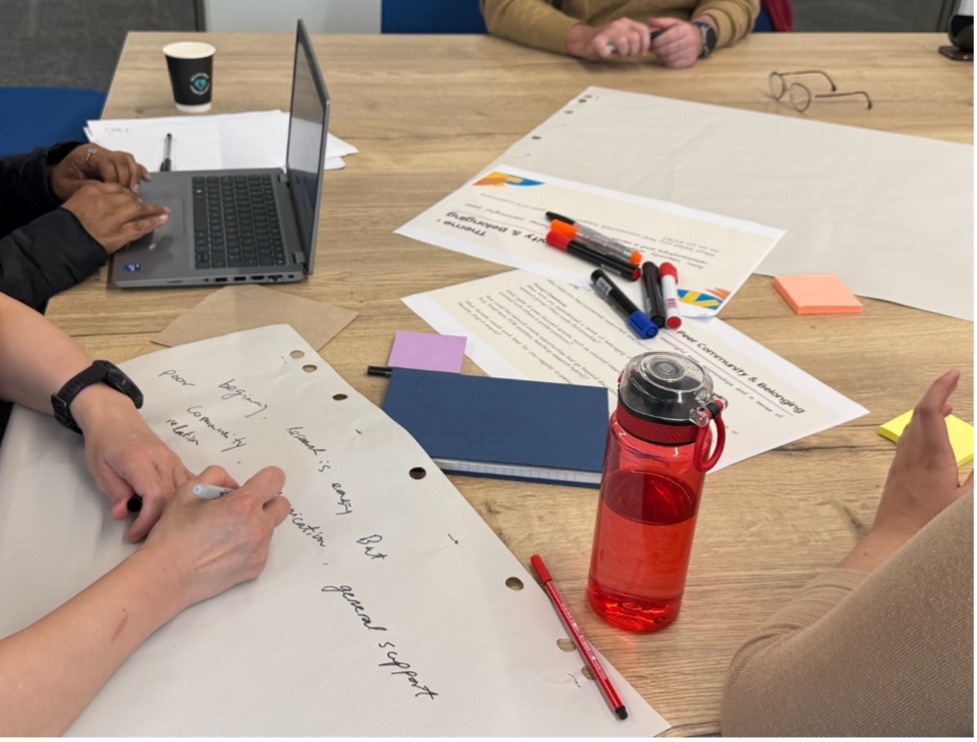
Working in small groups, participants used flipcharts and Post-It notes to share what the Network could do to support them under each of these themes. Each group shared their ideas with the wider room and, using dot-voting, participants indicated the suggestions that mattered most to them. Common ideas surfaced across themes and were fairly consistent across all three consultation sessions.
After the live consultations, we anonymised responses and shared a short summary for asynchronous comment, so colleagues who could not attend could engage and add their perspectives. We then clustered similar inputs and used simple counts (for example, likes or frequency of mention) as a rough guide to salience, translating the strongest, feasible ideas into a short list of short-term priorities.
The consultation data provided community-informed direction for us, both with regards the remit of the Network, the name and language that resonates with how the community identify and the way the community want to interact.
A new name – Pathfinder: Odyssey Researchers Community
For a while now, it’s been clear that the name ‘Late Career Early Career Researchers Network’ was not serving our community effectively. From the consultations, many participants said they had not previously heard of the Network and many expressed dissatisfaction with the name, some stating that they did not identify with the terms Late Career or Early Career (ECR). However, finding a new name that felt inclusive of our members’ varied career experiences was tricker than we had expected. We wanted to find something which captured the valuable knowledge and experience of those who have had non-linear careers, inclusive to those who have entered academia as a new quest later in life and that also recognises that some of our members have spent extended periods in roles viewed as early career. ‘Odyssey‘, meaning “an extended adventurous voyage or series of experiences that give knowledge or understanding”, felt like a good fit for our community.
The Future
We have been on our own ‘Odyssey’ as we worked towards the reinvigoration of this community. We look forward to our official relaunch event in January 2026, and what the new year ahead and newly formed Network action plan, summarised below, will bring for our members.
Networking and information sessions: We are planning to host a regular online hour with alternating formats. One month offering a short practical input with Q&A (for example, narrative CVs, mentoring routes, or where to find writing and funding support). The next month providing open, agenda-free networking: time to compare notes with peers.
Identity, visibility, and esteem: We are launching the refreshed identity including a new name, Pathfinder: Odyssey Researchers Community, to make it easier to recognise and join. To celebrate diverse routes, a short spotlight blog series during 2026, showcasing community members’ career pathways and practical lessons learned is planned. Contributions will be invited through a light-touch call, with supportive editing so first-time writers feel welcome.
Resources and signposting: We are building a webpage that explains who this community is for, sets out our values (Inclusion, Recognition, Belonging), and offers a resource bank clearly labelled for PGR and Research Staff audiences.
Community relaunch: In January 2026, we will mark this new chapter with an inclusive gathering: a hybrid meet-up. The event will introduce the refreshed identity and new name, outline the programme for the year ahead, and offer simple ways to get involved. We are excited to reconnect with current Network members, welcome new members, and share learning from the relaunch with colleagues elsewhere who are working to build more inclusive research cultures.
We would like to thank all who engaged in the community consultation to inform the refresh, the diverse and rich input is greatly appreciated and valued. We would also like to thank Team UofG Together Fund for funding this project.
 The Auditorium: a research culture and researcher development blog