
Freya Walker 2024-2025 Research Culture & Researcher Development PGR Intern (Communities) and Fátima Sal 2024-2025 Research Culture & Researcher Development PGR Intern (Research Staff Events).
In a hybrid and often isolating academic environment, fostering genuine connections can be challenging. That’s where Coffee Connect comes in – a monthly initiative designed to bring members of our Research Staff, PGR and Research Professional Staff community together for short, casual, low-stakes conversations over coffee.
As our one-year internships with the UofG Research Culture and Researcher Development Team come to an end, we reflect on the success of Coffee Connect and offer our readers the wisdom of our experiences. We start by answering a question we are frequently asked: What is Coffee Connect?
What is Coffee Connect?
Coffee Connect is a simple but impactful idea – each month, participants are randomly paired with someone from their community to meet for a coffee – this can be on campus or online, depending on personal preference, location, and to fit into busy diaries. There’s no pressure to work together on a project or output, no need to discuss research or work exclusively, just an opportunity to chat, share experiences, find out who does what across the university, and build relationships across roles and disciplines.
Initially launched for Research Staff, the initiative quickly gained traction, and we therefore launched a new Coffee Connect, this time for Research Professional Staff to help them connect in a way that fits into their busy work lives. We then wanted to ensure that there was an equitable offering available across our audiences and launched our third Coffee Connect initiative for PGRs. The impact of conversation and dialogue during an, often, isolating and intense doctoral journey can be transformative for wellbeing and community-building.
Expanding the reach
We decided to experiment and attempt to take connections further by arranging group Coffee Connect Community events – on campus. These events are a complement to the activities of the community and offer a chance for people to come together in greater numbers for meaningful discussions around culture, community and collegiality.
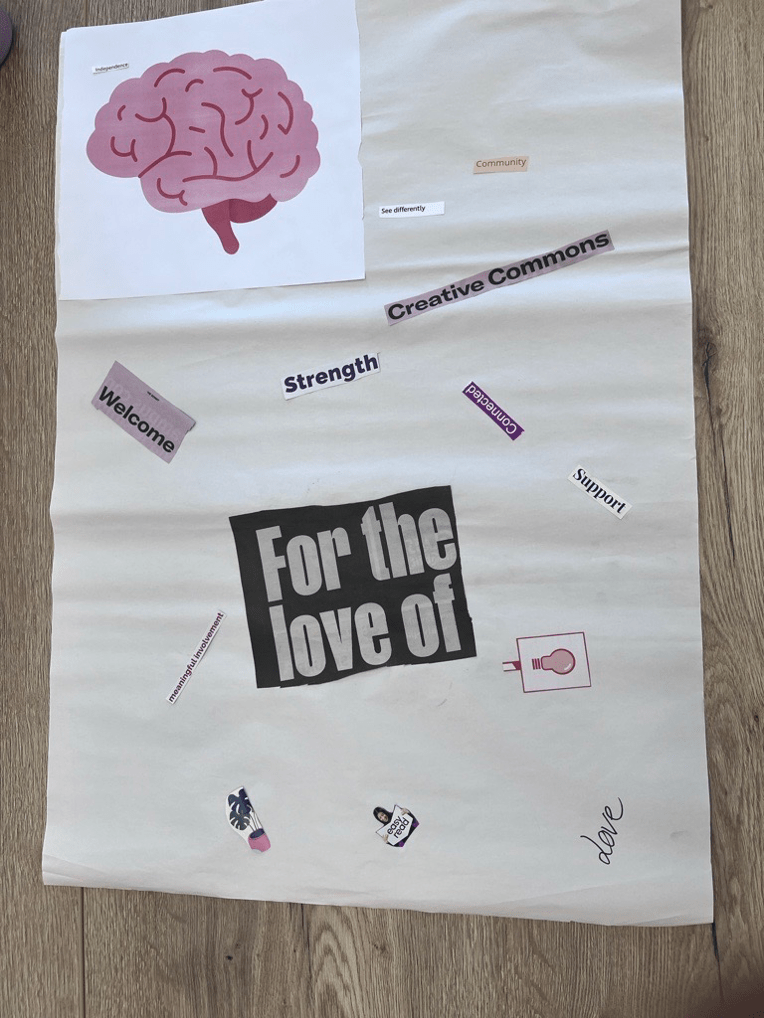
One session for Research Staff centred around the five senses, inviting participants to reflect on how the body engages with research. Another compared the body’s organs to the body of research, sparking conversations about how our work ‘feels’ in our day-to-day lives.
PGR Coffee Connect officially launched with an on-campus community event that was met with enthusiasm and high engagement. We started by playing a game centred around matching pairs, for example, Barbie and Ken, Night and Day. We sense-checked the pairs within our team, however, we did not anticipate that so many of the PGR community would not know these pairings. This was a lesson in not assuming because a few people know a reference, that it is ubiquitous.
Similarly, in September, Research Professionals had their own Community Coffee Connect event which brought people together in a lively, interactive atmosphere. We started with a game of Networking Bingo to help people mingle, followed by Most Uncommon Commonality (a game in which the pairs have to find out the most uncommon fact between them) – a playful exercise that revealed some surprising, shared traits among participants. One memorable moment was discovering that two attendees had grandmothers who were both twins!
Many participants have shared how brief conversations and connections have brightened their month:
[The most valuable experience from Coffee Connect has been] “having an opportunity to meet with Research Professionals informally – I haven’t had similar opportunities before at the University.”
[I enjoyed] “learning more about people rather than just their job titles.”
“It’s good to get to know people on a personal level as well as on a professional capacity.”
As of October 2025, our Coffee Connect communities have grown to include over 200 PGRs and 150 Research Professional Staff members signed up to monthly coffee chats, in addition to the 140 members of the previously established Research Staff Coffee Connect. Together, these demonstrate the ongoing demand for informal, inclusive community spaces within the research ecosystem.
Lessons learned
Coordinating Coffee Connect for Research Staff – while also taking part as Research Professional Staff participants – has been both a challenge and a joy. At first, we needed to truly understand the essence of Coffee Connect for it to make sense to us. Once we became participants ourselves, the concept came alive. Meeting new people and sharing stories made the process not only rewarding but essential to understanding how to improve the experience for others.
Designing the right system for pairing participants efficiently and ensuring clear communication became our mission. Initially experimenting with asking (and attempting to meet) participants’ preferences to meet on-campus vs online or someone from within their College vs the wider University, we soon realised that not only did this make matching more challenging, but it made the respective matching pools smaller. We adopted a randomised approach instead, splitting the list of participants into two columns as pairs. To address concerns about rematching the same pairs within a short space of time, we decided simply to make subsequent matches by rotating one column whilst keeping the other stationary. This way, the combinations change every month without having to reshuffle everyone.
Making participation straightforward, we send out pairings in the first week of each month with instructions on what to do next. Operating within calendar months, although demanding for us as programme leads with three different Coffee Connects to manage, was essential to ensure that the timeframe of the matches was clear.
Organising Community Coffee Connects added another layer of learning – offering the opportunity for participants to provide us with valuable feedback on what worked, what didn’t, and what truly helped people feel seen. The conversations were as wide-ranging as they were unexpected – from insights about astrophysics to career journeys and shared professional networks and even our favourite ways to unwind– reminding us how diverse and creative our community can be.
Running Coffee Connect has also shown us the importance of tailoring communication to different audiences. When launching the PGR version, we were surprised by how many clarification enquiries we received in comparison to the Research Staff and Research Professional communities. This led us to create an FAQs page for PGRs, allowing participants to find answers independently and engage more confidently. When connected, PGRs received a link to the FAQs in their matching email to ensure that next steps, expectations and boundaries were clear. This format will be rolled out to all Coffee Connect communities in 2026.
Perhaps most importantly, we’ve learned the value of flexibility. Each community – Research Staff, Professional Staff, or PGRs – brings unique needs and communication preferences. Adapting Coffee Connect to meet these has been key to its success and sustainability. As examples, for Research Staff, the need is to bring together inter-disciplinary voices where otherwise they can be siloed. Similarly, for PGRs who look to belonging and community-building early in their doctoral journey. In the same vein, Research Professional Staff connecting offers a change to exchange knowledge and experiences across the various University services.
And through it all, we’ve come to see Coffee Connect as an exercise in slow connection – a deliberate, reflective way of working and relating. It is about being present, listening, and allowing conversations to unfold in their own time.
Personal experiences
Freya: I have been signed up to PGR Coffee Connect since it began. My first Connectee was lovely. I’ve always wanted to visit China and absolutely love Chinese history, so it was wonderful to meet someone who shared that passion – and even better to get recommendations for when I eventually go!
My next two Connectees, however, didn’t reach out after my initial email. That was disappointing, but I understand how busy people are and how easily messages get lost. Still, it taught me something valuable about patience – connection takes time, and that’s okay. I have noticed that when people can come along and meet their Connectee, it can be a positive and valuable experience, even if they felt a bit daunted or uncertain at the prospect of meeting someone new. For this reason, I remain hopeful! I have just arranged to meet my fourth Connectee and I am looking forward to fostering this connection.
Fátima: I’ve been quite lucky with my Connectees – they’ve always shown up and often taken the initiative to email first! One even organised everything themselves; all I had to do was turn up. Through these conversations, I’ve realised how fast-paced academic life can be. Some of my Connectees were thriving; others shared how they were struggling. Yet, every conversation reminded me that you can always start over with intention. Every day is a good day to begin again.
Looking ahead
As our internship draws to a close, we’ve been reflecting on the impact of Coffee Connect – not just on the individuals who’ve taken part, but on the broader culture of connection it has helped to foster. Hearing stories of unexpected collaborations, new friendships, reconnections with colleagues, and the simple joy of meeting someone new has been deeply rewarding.
Therefore, if you’re part of a network, consider helping it grow – invite colleagues, start a conversation, or bring it to your department. The more diverse the network, the richer the exchanges.
Community doesn’t have to be complicated. Sometimes, it begins with a cup of coffee, a willingness to pause, and a simple hello.
 The Auditorium: a research culture and researcher development blog