
Sumayya Usmani is a Researcher Development PGR Writing Intern and a second year DFA candidate in Creative Writing. Dr Rachel Chin is a Researcher Development Specialist in Writing and Communication and a Lecturer in History.
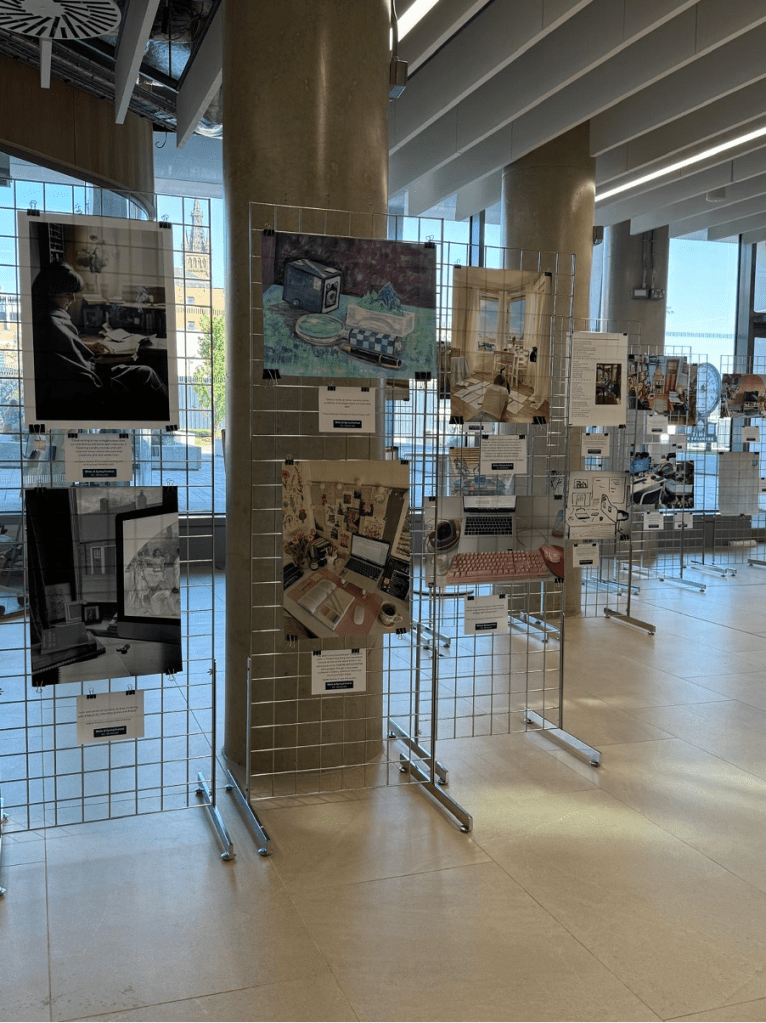
Write of Spring is the University of Glasgow’s annual two-week writing festival. Hosted each May, this year’s festival featured ten community-led writing-themed workshops or events, four expert roundtables, six online/in-person writing retreats and a Writing Spaces and Places exhibition, comprising submissions from students and staff across UofG. It engaged with over 400 attendees.
The festival is an opportunity to offer non-discipline-specific writing support that showcases the diverse knowledge and expertise within the University. In this article we’ll share how we approached organising the festival, reflect on our key takeaways and start thinking about where we might go next.
Our organisational ethos:
We focussed on developing and showcasing the expertise within our UofG community. We launched a funding call, inviting staff and postgraduate researchers (PGRs) to pitch their ideas to host a writing workshop or event. Applicants could apply for up to £500 and we promised to host a minimum of eight community-led events.
All our events were open to anyone who would benefit. The festival was open to anyone who writes, including but not exclusively PGRs, (Postdoctoral) Research Staff, Research Professional Staff, Research and Teaching Academics, Learning and Teaching Specialist Academics, and Technicians. By not gatekeeping we insisted on representing the diversity of writing that takes place as part of our professional lives at UofG and created spaces where it was visible and celebrated.
Sumayya’s top three learnings:
- The art of diplomatic coordination with diverse hosts:
Offering the opportunity for potential workshop hosts to create their own workshop ideas, in line with the festival’s themes, revealed the delicate balance required in event coordination and emphasised the ability to appreciate their ideas. Each host brought different expertise, styles, and expectations. Some needed detailed guidance while others preferred creative freedom. I learned that successful diplomacy meant listening carefully to each host’s strengths and concerns, then finding ways to align their vision with the festival’s overall goals. The key was being flexible enough to accommodate different approaches while maintaining coherence. Regular check-ins and clear communication proved essential—not just for logistics, but for making each host feel valued and supported.
- Creating genuinely welcoming spaces takes intentional work:
I had agency in how I communicated with participants and session hosts. This offered confidence to be genuinely welcoming towards them. I learnt how to anticipate needs not articulated such as providing clear signage for nervous first-time attendees or supporting workshop hosts and ensuring accessibility generally. Simple touches like diverse catering options, and brief introductions before each session helped everyone feel welcome. I learnt how small intentional actions made participants feel included. I also learnt that giving the session host agency allowed them to excel at sharing what they know best with the audience in a positive manner.
- Vulnerability creates powerful learning:
The festival’s most impactful session for me was one on reflective writing where we were asked to connect with our energy by colouring in a printout diagram of a body. Watching others use colour to draw out their ‘essence’ – and gaining insights as to how they see themselves, was moving, especially when one of the participants got emotional. They said it helped them unblock various negative thoughts they had about their writing struggles and creative blocks. This moment of vulnerability transformed the entire room’s energy, prompting others to share their own challenges and breakthroughs. This taught me that facilitating meaningful events means creating space for genuine human connection.
Rachel’s top three learnings:
- It’s not just the writing that matters. It’s about what happens in the spaces in between the writing:
During Write of Spring we hosted six writing retreats. These retreats were consistently popular, and we had very few cancellations or ‘no shows’. People clearly valued having protected time and space to write. However, during the retreats, I started to notice something else. Attendees were using the retreats to write, of course, but they were also a space to connect with fellow researchers, students and colleagues. A considerable added value of the retreats was being able to bounce ideas off fellow writers, seek feedback, share experiences and feel solidarity in a writing challenge. Because the retreats were open to anyone who writes, they also made visible the diverse community of people who write at UofG.
- Be open to risk. Workshop facilitators also need space to test ideas and develop.
The festival showcased ten unique writing-themed events hosted by UofG PGRs, Research Staff and Research Professional Staff. When we started planning Write of Spring, one of my priorities was to create a festival that showcased the diverse knowledge and interests at the University. I also wanted to offer development opportunities to colleagues, by supporting them to host a session or event that they might not otherwise have been able to. The sessions that ran during the festival were offered by a range of individuals and groups, some with a lot of experience facilitating, and some who were new to the game. Recognising this spectrum of experience, we decided to offer mentorship to colleagues who wanted a bit more support in planning their session. This approach allowed us to support and foster new talent as well as provide a platform for more experienced facilitators to explore writing topics that are outside of our usual offering. It underlined that facilitators need time, space and support to develop their practice, regardless of experience level.
- Our UofG community is generous with their time and knowledge!
I already knew this, but it’s worth saying it again.
What’s next?
Write of Spring will run for the third time in May 2026. Building on this year’s successful pilot funding pot, we will continue supporting our UofG community to propose and deliver writing-focussed events and workshops as a core part of the festival. To provide even more robust support, and to reinforce the funding as a development opportunity, we aim to expand the mentoring that workshop facilitators receive, by partnering with colleagues beyond the core project team. We are also excited to highlight topics around writing with English as an Additional Language, a new part of the festival that will be spearheaded by Dr Rachel Lyon. Finally, we will be working to engage with an even wider and more diverse audience of writers at every festival. We all write, and Write of Spring celebrates this shared experience, no matter what it looks like.
 The Auditorium: a research culture and researcher development blog