
Pathfinder Career Narratives is an ongoing series tracking the career choices and experiences of doctoral graduates. You can see all of the posts in the series here. You can find all of the Pathfinder resources and opportunities here. Today’s blog is written by Dr Evgenia Likhovtseva, Knowledge Exchange and Research Project Manager, University of Ravensbourne, London. You can find Dr Likhovtseva on LinkedIn.
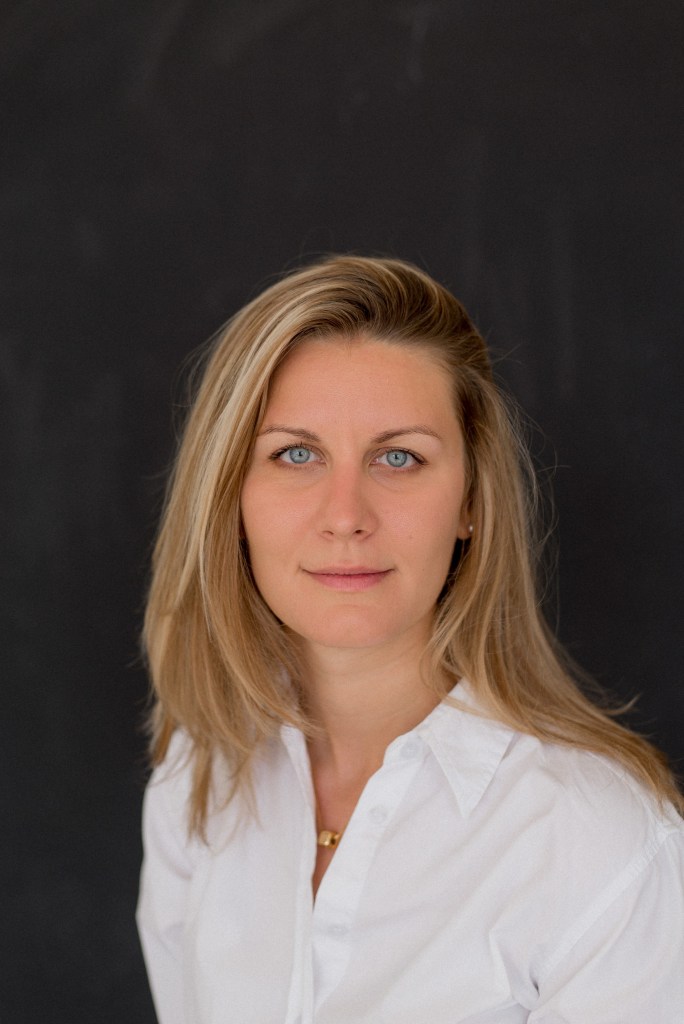
Name: Evgenia Likhovtseva
Doctorate subject area and year of completion: PhD in Education, Education Policy, 2021
Role and employer: Knowledge Exchange and Research Project Manager, University of Ravensbourne London
Approximate salary bracket for this type of role: £40,000 – £50,000
Back when I was an undergrad studying Philosophy, I went to a three-day conference-slash-retreat, with lots of big ideas, long walks, and even longer conversations about how to fix the world. Everyone there seemed absurdly smart and self-assured, tossing around theories like it was second nature. I remember thinking: Right. I clearly need a PhD if I ever want to sound that clever.
I’ve always been drawn to working internationally. I see myself as a global citizen. I wanted to study abroad, explore the world, and understand different cultures. I was lucky enough to receive a scholarship for an MA in Public Policy and Management at the University of Brunei Darussalam. As part of the programme, I spent a semester at UC Berkeley, working on a project with San Francisco Open Data. My team explored how public institutions could better partner with external organisations to use data and technology more effectively.
Coming from Russia, doing all this in English and in California, no less – was a huge leap. It was difficult, disorienting, and, at times, deeply uncomfortable. I had to adapt quickly, build skills I’d never learned before, and, in many ways, reinvent myself. But the biggest lessons weren’t technical – they were personal: how to communicate clearly, work across cultures, and find my voice in unfamiliar spaces.
And yes, confidence. That was a big one, especially as a young woman with ambition, trying to build a career on unfamiliar ground. But as a famous philosopher once said: what doesn’t kill us makes us stronger. My drive to make the world better only grew. I started to observe how developing countries were working to strengthen their higher education systems to compete globally.
Fast forward, and I was starting a PhD at Trinity College Dublin, supported by a scholarship. Not in Philosophy this time, but in the School of Education, still chasing big questions, just from a slightly different angle. My research focused on the development of ‘World Class Universities’ in the BRICS countries and their role in shaping global higher education. Through this work, I came to understand the importance of research with real-world impact, translating ideas into policies, practices, and solutions that benefit people and communities. I carried out fieldwork in South Africa, Brazil, China, and Russia. And it was around this time that I began thinking seriously about life beyond academia.
Don’t get me wrong: I still wanted to become a professor and carry on with the research I loved. But I was also increasingly curious about the so-called ‘real world’. One turning point was a three-month fellowship in China, where I had the chance to experience everyday life and engage with Chinese policy and ways of thinking. It challenged a lot of my assumptions and widened my understanding of global cooperation.
Eventually, I started applying for research roles outside academia. I remember going through every stage of the interview process with a major consulting firm and not getting the job. I was devastated. I thought, surely after a PhD, I’ve got what it takes. I knew how to design and lead research. But I quickly realised I was missing a whole other set of skills: project management, time planning, team coordination, and budgeting. These weren’t exactly common topics in academic seminars.
So, I had to go back to basics. I took a project management course on Udemy, learned from YouTube, joined communities of people navigating similar transitions, and reworked not just my CV, but my idea of who I was post-PhD. Strangely, it felt empowering.
I started reaching out to people whose careers I admired, asked for advice, and used insights from career coaches. I gave my LinkedIn a proper refresh, set up informal chats, and gradually built a clearer picture of what was possible. That process made all the difference in landing my first post-PhD roles.
I was fortunate to secure a part-time research position at Trinity College Dublin, alongside a role with Trinity Global, supporting the international recruitment team with research and insights. That’s when things really started to click. One of the projects I worked on was even featured in The Irish Independent, helping to inform changes to Ireland’s state examination procedures.
Soon after, I moved to London, another global city that felt just right, and joined the Association of Commonwealth Universities as a Research Officer. It was a truly international role. I led a major scoping study on university capacity building in Africa and Southeast Asia, contributing insights for the UK Foreign, Commonwealth & Development Office. I worked with universities, and funders on real-world challenges: research capacity, skills development, and institutional resilience.
What surprised me was how many organisations outside universities rely on researchers. I hadn’t realised during my PhD that many UK museums are independent research institutions. They produce original scholarship, support postgraduate students, and shape public knowledge. That’s how I ended up at the Imperial War Museum as Research Manager: something I never imagined, but found hugely rewarding. I supported PhD students, helped develop research strategy, and worked closely with curators and partners to ensure academic work had a public voice. It taught me that research isn’t just for journals or policymakers it can live in exhibitions, archives, and everyday conversations.
Now, in my role as Knowledge Exchange and Research Project Manager at Ravensbourne University London, I’m helping to build a research and knowledge exchange culture from the ground up in a young, specialist institution. It’s a job that demands strategy, creativity, and lots of patience, but I genuinely love it.
I’m also studying for the Project Management Professional (PMP) qualification to sharpen how I lead projects and manage delivery. I’ve joined professional bodies like ARMA to stay connected with the sector and keep learning. And yes, I still publish the odd academic paper – because apparently, old habits die hard.
 The Auditorium: a research culture and researcher development blog