
Pathfinder Career Narratives is an ongoing series tracking the career choices and experiences of doctoral graduates. You can see all of the posts in the series here. You can find all the Pathfinder resources and opportunities here. Today’s blog is written by Dr Katie Linder, Interim Vice Chancellor for Strategic Enrollment and Student Success and Associate Vice Chancellor for Academic Innovation and Strategy at the University of Colorado Denver. You can find Dr Linder on LinkedIn and at her professional website.
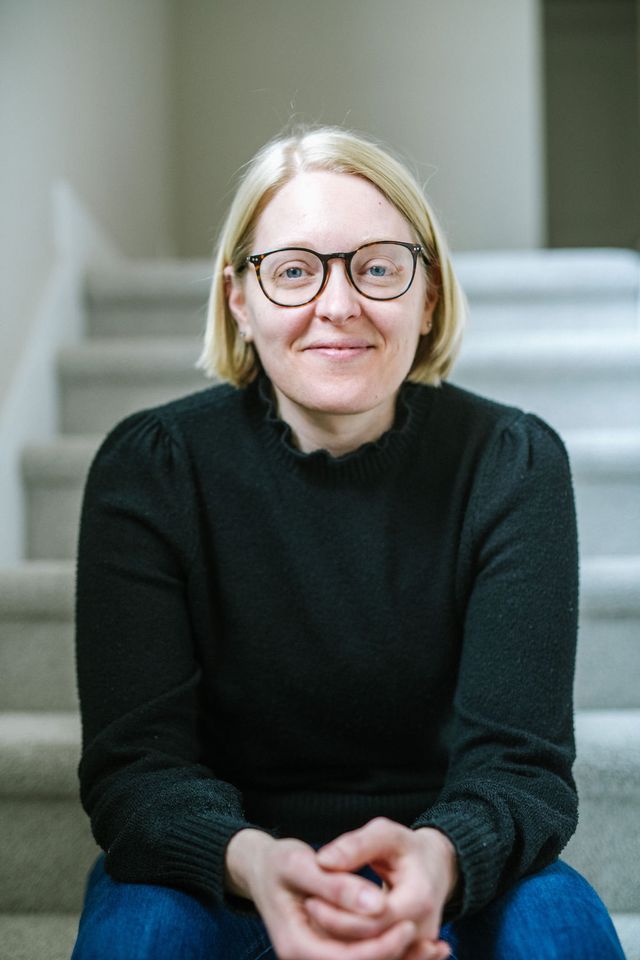
Name: Katie Linder
Doctorate subject area and year of completion: Women’s, Gender, and Sexuality Studies, 2011
Role and employer: Interim Vice Chancellor for Strategic Enrollment and Student Success and Associate Vice Chancellor for Academic Innovation and Strategy at the University of Colorado Denver
Approximate salary bracket for this type of role: $150k-$200k+ USD
I started my first job out of graduate school before I graduated. That role was working in a Centre for Teaching and Learning supporting the professional development of faculty members in their teaching, research, and overall career growth. During this role, I also started facilitating workshops and offering keynotes at other universities and conferences. After that role, I moved to a director position at a research unit focused on the efficacy of online teaching and learning. I did a significant amount of publishing in that role and it also involved a large amount of public speaking. While I was in this role, I also pursued a coaching credential and started to coach clients on the side.
Following that position, I shifted to a role that oversaw program development at another university. It was also focused on online teaching and learning. I moved to this institution right before the pandemic in January 2020, and I was quickly promoted after another leader in the organization left. I inherited a number of teams that expanded my role to overseeing marketing, enrolment, and student success initiatives in addition to program development. From that role, I came to my current institution. I have held three different roles here in the last 3.5 years, including my current interim position, which oversees a 200+ person division.
Over time, I came to understand more of what I cared the most about in my work, which is supporting the strategic efforts of an institution. I earned a PMP credential and a change management credential (in addition to my coaching credential) and those all served me well to shift into different roles that allow me to lead and support larger projects and initiatives that are often cross-campus engagements.
My partner and I also decided early on in my career to invest in my growth. So we moved multiple times to different institutions over a 10-year period so that I could move around (and move up) within different organizations. It was an incredibly helpful way to learn new skills and try out different institution types to see where I might fit best. During the pandemic, I did briefly consider shifting to industry, but my commitment and investment in higher education was significant enough that I decided against that route.
In my current roles, I oversee several large and small teams that are related to the student experience at my institution. I also oversee a team of project managers who support our institution’s strategic plan and I oversee teams that provide faculty development support in the teaching and learning arena. As I shifted from director-level roles to higher-level leadership opportunities, I began to work with more strategic projects that often had a wider impact across the organization. That work is always really fun and invigorating for me.
In a typical week, I often have 40-50 meetings on a range of topics. I interact with most parts of our university (faculty, budget, facilities, institutional research, academic leaders in our schools and colleges, etc.) on a very regular basis. Some of my current ongoing projects include implementing the recommendations from an 18-month working group that I co-facilitated on program viability and curricular innovation. I’m also working with several groups on creating better infrastructure for our microcredential efforts across the campus. Aside from specific projects like that, I also provide support to about 40 projects that happen across our institution that are tied to the work of our strategic plan.
Early on in my career, I had to learn how to delegate effectively. I started overseeing large amounts of staff, and I had to learn how to lead them and how to hand things off to other people. There is an art to delegation to make sure that people know that you trust them, that they know exactly what they need to do to be successful, and that they know you are there to support them if there are questions they have along the way. I really had to let go of the idea that I needed to do everything myself. The more effective collaborations and teams that I gained experience with, the easier this was to do.
I had so many different people who supported me along the way. My partner has been an incredibly strategic person for me to make career decisions with as they have come up. I also had several important sponsors (often my supervisors) who encouraged me to try for different roles that were often higher-level leadership roles than my current position at the time.
I have always tried in my career to try and develop skills that are future-oriented and transfer friendly to many different contexts (project management, change management, and coaching are all good examples). I think any fears I have had are that I wouldn’t be relevant since needs can change quickly, so I’ve worked hard to keep up with new credentials and learning along the way.
I have had several formal leadership learning experiences throughout my career. At every institution I have worked at, I have attended the leadership programs offered. I also did the HERS leadership program early in my career, which was very influential. In 2024, I also earned an MS in Organizational Leadership to augment what I had learned through various leadership roles over time.
One thing about leadership that has always resonated with me is that the more experienced you get, it becomes less about the “what” you know and more about the “how” you are as a leader and the approaches you take. I think the more experience you can gain in different roles, the more clear it will become what areas are most interesting to you and where you can make the most impact.
 The Auditorium: a research culture and researcher development blog