
By Charlotte Bonner-Evans, InFrame Project Manager*
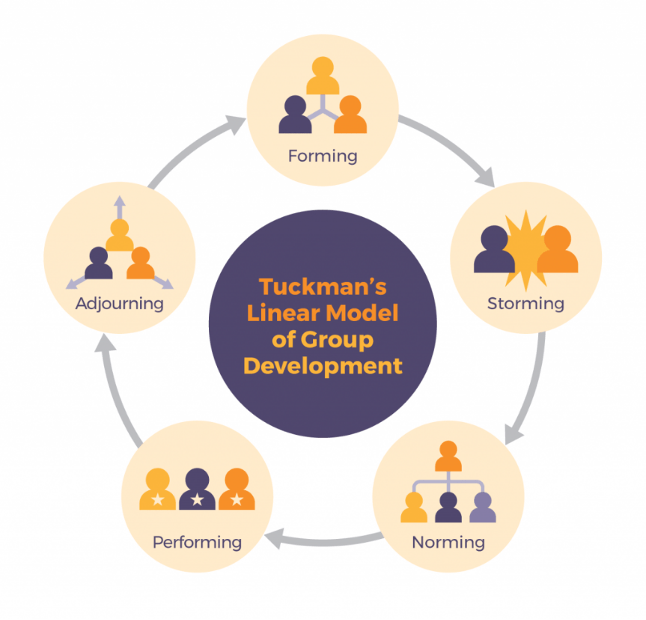
It is a rare privilege in project management to be in a project from the beginning, where we are actively experimenting, reflecting and learning from experience (see Kolb’s experiential learning model). As part of the InFrame project team, I am uniquely positioned to be living a project management theory, seeing it unfold in real time and reflecting on the process in real time too!
The InFrame (Inclusive Framework for Collegial Research Leadership) project is aimed at exploring collegiality and inclusivity within the research ecology. This project is not just about achieving its goals but also about the journey of continuous learning and reflection. By integrating various reflective practices and management theories, the InFrame project itself offers the opportunity for us to evaluate and share our experiences with project management practices and team development principles with the Higher Education sector.
Reflection is a critical component of the InFrame project, aligning with the theory of ‘reflection-in-action’ as proposed by Donald Schön. This theory emphasises the importance of reflecting on one’s actions while they are happening, allowing for real-time learning and adaptation. This approach is particularly relevant in project management, where the ability to adapt and learn on the go can significantly impact the project’s success, especially when working at pace.
As with all simple and straightforward linear models in theory, they are not simple and linear in the real world, and it often takes some careful facilitation and a duty of care for our colleagues to elicit reflections from on what team members have experienced and how they are learning through it.
Three months into the role of InFrame project manager, and still recruiting to the large cross-institutional team that I manage, I find myself reflecting (‘in action’) on my recent experience using the stages of team development management theory put forward by Bruce Tuckman. By combining these theories, I am consciously aware of the dynamic stages we as a team are moving through in real time, as we get to know each other, welcome new members, and figure out how to work well together.
By sharing the application of these models to our ongoing team with you, I hope you too can apply ‘in action’ reflections on your team’s dynamics and to support your team to mature.
Tuckman’s Stages of Team Development
Forming, Storming, Norming, and Performing are the four stages of team development proposed by psychologist Tuckman in 1965, later developed into five stages, with a fifth stage, Adjourning, being added later after testing and feedback. This model provides a framework for understanding the stages that the InFrame project team is moving through as I reflect and continuously improve on the leadership I offer. The model describes the stages as:
- Forming: Team members come together and start to understand their roles.
- Storming: The inevitable conflicts and disagreements are addressed as roles, processes, and behaviours are clarified.
- Norming: The team establishes working ‘norms’, settles into regular patterns and agreed processes, and begins to work more cohesively together.
- Performing: The team works effectively towards achieving its goals.
- Adjourning: The team disbands after achieving its objectives.
Tunnelling through the developing project processes and operating procedures, building relationships, and taking action all at the same time in our first few months as a team, I reflect that the forming and storming stages have been interspersed with some rapid (by necessity!) norming and performing.
As a team we have worked toward embodying the underpinning principles of the InFrame project, taking an inclusive and collegial approach, collaborating, and celebrating the widest range of contributions. Below, I align the principles of the InFrame project with Tuckman’s stages of team development to share how reflection in action can support the development of teams alongside established project principles. I also provide some practical examples of how this might be achieved.
1. Forming
InFrame principle 1: Equality, Diversity, Inclusion, Accessibility (EDIA). During the Forming stage, it was crucial to establish an inclusive environment where all team members feel valued and respected. This set the foundation for an intersectional approach to EDIA, ensuring that diverse perspectives are considered from the outset in the design of the project. I have:
- Adopted an Inclusive Approach: Ensuring that all project activities consider the diverse backgrounds, strengths, and needs of team members.
- Provided Accessibility Resources: Making sure that all materials and activities are accessible to everyone.
- Encouraged Cross-Functional Collaboration: Facilitating collaboration between different departments, specialists and areas of expertise.
- Shared Knowledge Openly: Implementing a culture of open-access, and rapid knowledge sharing to maximize the impact of the project.
2. Storming
InFrame principle 2: Disruption of Institutional Hierarchies. The Storming stage often involves conflicts, confusion, and power struggles as team members assert their roles. By actively disrupting institutional hierarchies, the InFrame project aims to create the conditions where new ideas and leaders emerge, and this principle when applied to the team, has helped us to navigate this challenging phase more effectively. I have:
- Facilitated Open Discussions: Created space for team members to voice their opinions and challenge existing assumptions, modelling this by asking for feedback, challenge, and support.
- Used Thought-Provoking Questions: Asking questions that support the team to think deeply and critically about their work and self-evaluate.
3. Norming
InFrame principle 3: A Synergistic Collaborative Approach. As the team moves into the Norming stage, we are starting to establish norms and work more cohesively. A synergistic collaborative approach is intended to maximise alignment and cohesion, avoiding isolated silos and fostering a culture of sharing and collaboration that link across the different areas of expertise as well as across our three partner institutions. I have:
- Aligned Reflection Activities with Objectives: Ensuring that reflection sessions are directly tied to the project’s goals and milestones.
- Integrated Feedback Loops: Creating mechanisms for continuous feedback that inform project adjustments and improvements.
- Incorporated Real Scenarios: Using real examples from the team’s past experiences and contexts, to make reflection more meaningful and applicable.
4. Performing
InFrame principle 4: Positive Recognition and Celebration. In the Performing stage, the team is focused on achieving its goals and working effectively together. Positive recognition and celebration of practice are essential to reach the performting stage and to maintain morale and engagement for the project’s life course. Reinforcing the team’s achievements and contributions as well as giving developmental feedback supports this. The InFrame project will run positive recognition initiatives for our research communities, and this is reflected in how the team respond to one another too. I have:
- Instigated ‘Wins of the Week’ – prioritising positives, successes, and the overcoming of challenges, at the top of the agenda of our weekly check-ins. Positive reinforcement and support from team mates keeps everyone engaged.
- Aligned Reflection Activities with Objectives: Ensuring that reflection feeds directly forward into future performance.
- Promoted Inclusive Leadership: Encourage team members from all levels and backgrounds to take the lead within the team, sharing credit and opportunities.
5. Adjourning
We are not yet at this stage but when the team reaches the Adjourning stage, reflecting on their journey, professional learning and enhanced abilities and skills from their experiences will be crucial. Understanding the specific practices and behaviours that contributed to their success and ensuring that these insights are carried forward into future projects will serve them well in their next endeavours, building confidence and employability. We are lucky to have a dedicated InFrame Evaluation Manager to support this approach too.
By aligning Tuckman’s stages with the underpinning principles of the InFrame project, teams can navigate the complexities of project initiation and development more effectively. Each stage, and the transitions between, provides an opportunity to reinforce and enable the project principles, ensuring that the project remains inclusive, collaborative, and reflective throughout its lifecycle.
When you are in the eye of the forming and storming stages, it is challenging to reflect on what is happening and why, and let the process take its course without becoming unduly concerned. I hope that my reflections on how Tuckman’s’ stages paired with Schons’ reflection principles can support your projects and teams in implementing continuous reflection, critical thinking, and a commitment to driving meaningful progress and innovation.
* Assisted by Microsoft CoPilot.
 The Auditorium: a research culture and researcher development blog
One thought on “Reflection-in-action: living a project management theory”