
Pathfinder Career Narratives is an ongoing series tracking the career choices and experiences of doctoral graduates. You can see all of the posts in the series here. You can find all the Pathfinder resources and opportunities here. Today’s blog is written by Dr David Thompson, Research Data & Policy Officer at the University of Glasgow. You can find Dr Thompson on LinkedIn.
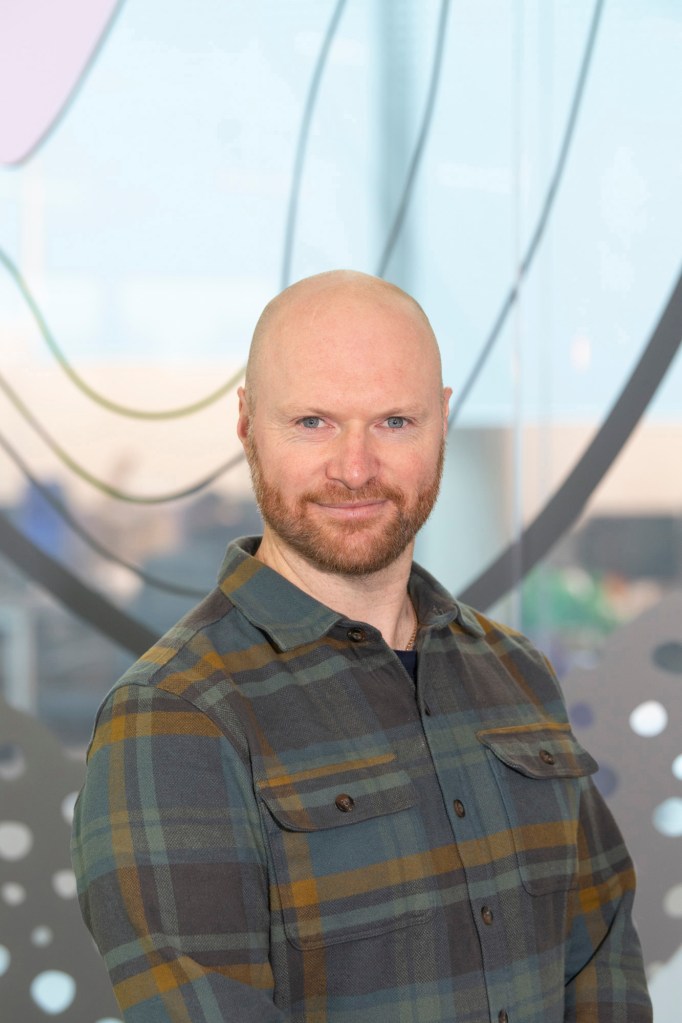
Name: David Thompson
Doctorate subject area and year of completion: Geophysics, 2011
Role and employer: Research Data & Policy Officer, University of Glasgow
Approximate salary bracket for this type of role: £30,000 – £35,000
The mantra that I followed during my academic career was that, so long as I was enjoying research and people were willing to keep hiring me to do it, then I was going to continue down that route. This approach served me pretty well, leading to a relatively “traditional” career in academia which culminated in a lectureship at a Russell Group university. Nonetheless, my values and priorities eventually led me in a different direction, culminating in my current role as a Research Data & Policy Officer.
I studied Geophysics at the University of Leeds (2003-2007) before undertaking a PhD in seismology at the University Bristol (2007-2011). The project involved deciphering the structure of the Earth beneath northern Canada and what this could tell us about tectonic processes occurring early in the Earth’s history. This involved remote field work across Northern Canada flying around in small aircraft installing seismometers and I was also lucky during this time to get the opportunity to work with another project investigating the East African Rift Valley with several field campaigns across Ethiopia.
I was extremely keen to continue with a career that offered both stimulating research questions and fieldwork, leading to me returning to Leeds as a postdoc (2012-2014) working on an ambitious project in Turkey investigating the North Anatolian Fault east of Istanbul. That was followed by a position at the University of Aberdeen (2014-2016) that offered much more freedom and autonomy in terms of research focus.
Alongside these positions, I was also actively attempting to acquire a fellowship. I interviewed for a NERC Independent Research Fellowship in both 2014 and 2015. This process was one of several things that instigated my disillusionment with academia. I came close to getting the fellowship at the first attempt and received some constructive suggestions. Having addressed these suggestions, I ended up getting a much worse assessment the following year with a completely different assessment panel. This experience highlighted to me the element of chance in terms of who is assessing your work and how your fate is often out of your control. Similarly, challenges with publishing and receiving unfavourable reviews compounded the feeling of swimming against the tide during this period.
In 2016, I began a lectureship at Cardiff University. I went into this position with my eyes open and optimistic in terms of building collaborations. However, there were more struggles in terms of constantly readjusting to an ever-shifting teaching landscape, a difficult PhD recruitment process, and disappointments in terms of funding applications. The best way I would describe this constant striving for success was that every step of the way felt like a false summit and once you’d reached the next stage, you were already being pushed to get to the next level. In addition, I found that the higher up the ladder you got, the further away from actually doing the research yourself you got. This wasn’t a surprise, but it was something I became increasingly less comfortable with over time.
Finally, and ultimately more importantly, was the impact on my personal life that constantly moving to new institutions and cities had. Moving around was exciting to begin with and I also pursued (unsuccessfully) opportunities in Australia, USA, Germany, Austria and Japan. In my mid-30s, still doing long distance with my partner (based in Glasgow) and in a job that wasn’t really proving to be the fit I hoped it would be, my mental health took a real hit. I suffered with burn-out and ended up taking time out of work. It was during this enforced leave that I cemented my decision to leave academia and move to Glasgow.
I moved up in late 2019 without a plan in terms of a job and was rather looking forward to having some time off to reassess things. A chance conversation between my partner and one of her colleagues put me in touch with Craft Prospect (see Pathfinder Career Narratives 13 for more on that company) and their sister company Omanos Analytics, a socially and environmentally focussed space data company based in Govan. I started with Omanos as a software engineer six weeks after arriving in Glasgow so not quite as much time off as I was hoping for!
Omanos was a small company; I was one of only two full time staff (the co-founders both had other jobs/companies). I feel like my background and training lent itself well to this role due to the requirement to cover many different aspects of the company. This included attempting to improve their data processing flows, business development, report writing and R&D. Another component that was key to the long-term success of the company, and one that I was all too familiar with from my previous career path, was competitive grant capture. I led on multiple grant applications during my time at Omanos and had a success rate (over 50%, more than £400k of funding) far in excess of what I achieved in academia (pretty much 0%). I think this related to the fact that the work at Omanos was so focussed on marginalised communities & the environment providing tangible and clear impact. I thoroughly enjoyed my time here with supportive management, fantastically talented colleagues and a rewarding company mission. Despite this, I found that I was moving into a role where I was getting further and further away from data analysis and knew that this was something I wanted to pivot back to.
I wasn’t actively looking to return to the university sector, but when I was sent the job description for my current role it felt like a perfect fit. My experience of the research landscape from the academic and private sectors coupled with my data analysis skills have been invaluable to my current role. People also often talk about the “transferable skills” you learn as part of your PhD and these can often be overlooked. I have found that the “soft” skills such as presenting, public speaking, writing and flexibility have been a key component of all my jobs post-PhD.
Ultimately, I’m proud of what I’ve achieved during my research career and wouldn’t change anything (despite the struggles). It’s led me to a place where I’m working as part of a fantastic, diverse team and where I can say (probably for the first time ever) that I truly have a good work-life balance.
 The Auditorium: a research culture and researcher development blog