
Pathfinder Career Narratives is an ongoing series tracking the career choices and experiences of doctoral graduates. You can see all of the posts in the series here. You can find all the Pathfinder resources and opportunities here. Today’s blog is written by Dr Neil Findlay, Research Development Manager at the University of Glasgow.
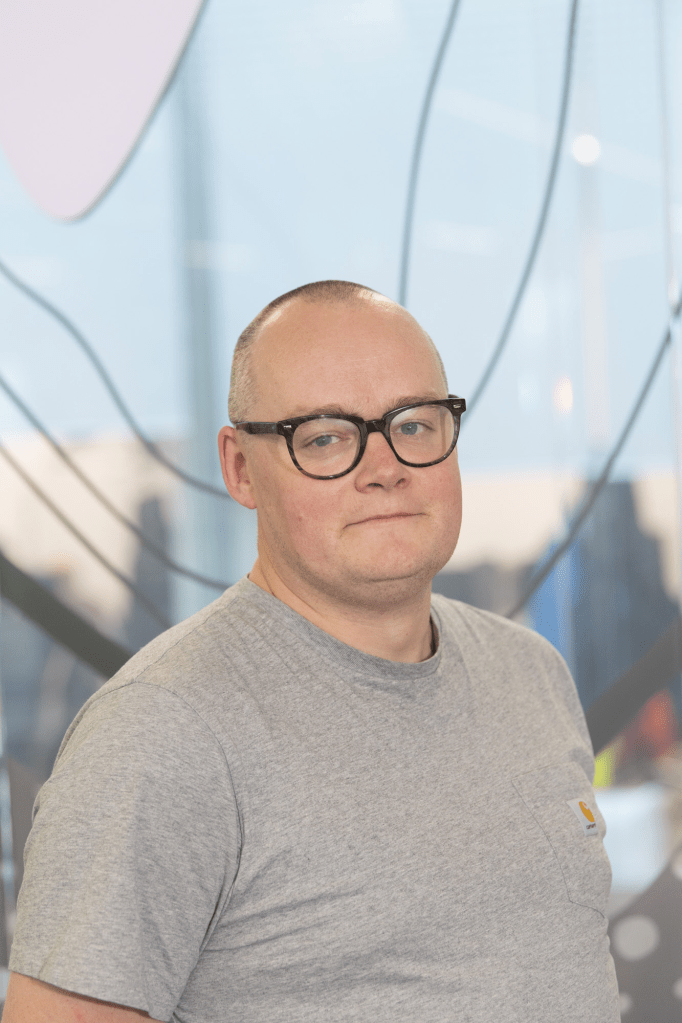
Name: Neil Findlay
Doctorate subject area and year of completion: Electron Transfer Chemistry, 2010
Role and employer: Research Development Manager, University of Glasgow
Approximate salary bracket for this type of role: Undisclosed
If you don’t know what you want to do when you grow up, that’s ok
When it was suggested that I do this, I wasn’t sure that what I had to say wasn’t already out there. There are some fantastic blogs in the Pathfinder series that mirror my own thoughts and experiences fairly closely (I’ll highlight one specifically later), so in an effort to offer something different I thought I’d make this pretty personal. Maybe it will resonate with you, maybe it won’t. If I reflect on career related decisions in the past, there has been a fairly significant reason behind them; how do you balance indefinite precarious contracts and have the stability needed to build a personal life?
Apart from a short placement as part of my undergraduate degree and an even shorter visit to Australia as part of my doctorate, I have spent my whole life in Glasgow. I completed my undergraduate degree at the University of Strathclyde in 2006 and stayed there for my PhD to work on electron transfer chemistry, graduating in 2010. It was great but hard work – long days in the lab and often working through weekends. What I studied was super electron transfer reactions, where an electron was donated by one molecule to affect a change in another. Figuring out if it worked required lots of fancy equipment and a lot of time, and while it was interesting, enjoyable and had enough to it that made me want to look for postdoctoral positions, I also realised that I wanted something that had a more direct application to it. If nothing else, it would make it easier to explain to my parents and grandparents.
I very much doubt I was alone amongst postgraduate students in dreading how best to answer the “So what do you do again?” question at family gatherings.
I started a postdoctoral position in 2010, also at Strathclyde, working on organic material synthesis and application. Basically, I tried to invent new materials for lights and displays. This started a run of short-term contracts where I was lucky enough to stay employed, work for the same PI, and stay in the same place between 2010 and 2019. I am under no illusions how fortunate I was, and how supportive my boss was in this period. It meant I ended up with a pretty strong publication record that stood up against others at my career stage, and I know I contributed to a successful and thriving research group. The whole group moved with my PI in early 2018 across the city (a whole 2.1 miles!). I coordinated the lab move, which I am grateful I never have to do again – anyone who has moved house knows the joys of packing your life into dozens of boxes!
At Glasgow, I worked as a post-doc for about 14 months before having ‘the talk’ with my PI. I wasn’t enjoying lab work anymore and didn’t see where I was going. I knew what I liked about working in research (managing activity, supporting others, reviewing and feedback, writing) and what I didn’t (lab work). It wasn’t a moment of clarity that happened instantaneously, I could see that it had slowly developed over a longer period, but there was a final incident that prompted me to speak to my PI. I was attaching a hose to a glass tap when the glass shattered and I sliced a gash into my finger. I’d sliced through nerves and required surgery. I still have less feeling in that finger, but in my finger rankings it comes in at number 10 (being right-handed and it being on my left hand pinkie, the most useless of my 10 digits).
Overall, I just wasn’t happy. I’d also had some time to reflect on what had happened in the nine years since my PhD, and realise that my priorities had shifted. In that time I had got married (2011), moved house twice (2013 and 2017) and started a family with my wife (2013 and 2017). Being in one place and not having to move for different positions had undoubtedly enabled this. I had benefitted from being good at what I did, a PI who was supportive and wanted to keep people he knew working for him, and working in a research area that was attractive to funders. But it meant I felt I missed the boat a bit for pursuing a research career of my own. I worked on my PIs ideas not mine. I didn’t really understand that a fellowship was a possibility until late in my postdoctoral career.
Five years after I left that position, I can also look back and recognise how much I changed in that time and perhaps why. All those milestones I mentioned earlier – marriage, kids – were interspersed with less happy times. My wife’s father passed away in 2010 while we were planning the wedding, and I lost my grandpa, gran and then my dad in the space of 13 months between 2015 and 2016. I didn’t have a huge desire to do something I wasn’t happy doing anymore. I’d lost my motivation for research.
In early 2019 I got the opportunity to work part time as a project manager on a large grant with my PI, and to work in the College of Science and Engineering Research Development team. It was eye-opening to see the breadth of research going on in the College and interact with academics beyond my narrow orbit of chemistry. I’ve worked split positions across two or sometimes three roles to keep me in full employment, which has been an adventure, but it has given depth to my experience and wider range of skills. If I think about skills from my postgraduate and postdoctoral periods that I still use regularly then chief amongst them is organisation and critical thinking.
Anyone who has been a post-doctoral researcher knows the pain of fixed-term contracts – all I can add to it is that I feel your pain. I was 39 years old when I first received an open-ended contract with no funding end date associated with it as a Research Development Manager. To celebrate, I bought a new TV. I’ve since taken a part-time secondment to further broaden my experience of working with researchers across the University, as a Strategic Research Initiatives Manager in the central Research Services Directorate.
If I’m honest, I didn’t know what a Research Development Manager was when it was suggested at first (I really wanted out of research!). A typical week is very varied. I support applicants applying for fellowships, work with academics who are developing and submitting large grants covering strategic themes, identify funding opportunities for academic colleagues and sign-post them. I manage internal/external calls to select applicants, I run events, I promote research as widely as possible. I’m currently co-developing a four-day course for potential fellowship candidates called Ignite with colleagues in Research Culture and Researcher Development. You may have come across an earlier blog from my friend and colleague Madeleine, who describes so well what we do that I can’t improve on it. However, unlike Madeleine I don’t have a burning urge to defend literature reviews (although I agree on the reasons why Research Development is my niche).
Moving into the role/roles I’m in now has been challenging and rewarding. I have absolutely zero regrets about leaving the lab – I don’t miss the smell of solvents in the slightest. It’s fair to say that I still don’t know what I want to be when I grow up, but I do know that I add value in the role I’m in and my contribution is valued doing what I’m doing now.
 The Auditorium: a research culture and researcher development blog