
Pathfinder Career Narratives is an ongoing series tracking the career choices and experiences of doctoral graduates. You can see all of the posts in the series here. You can find all of the Pathfinder resources and opportunities here. Today’s blog is written by Dr Julie Preston, Learning Coordinator, Digital Workspace at the University of Tasmania. You can find out more about Dr Preston’s career on LinkedIn.
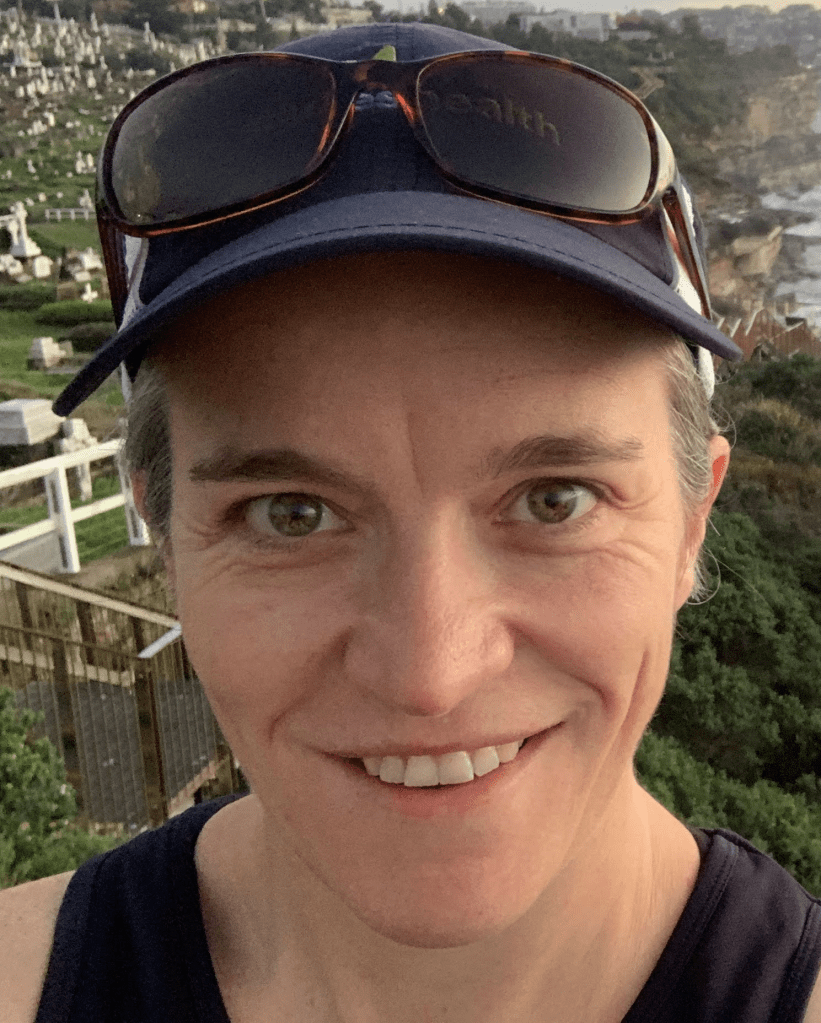
Name: Julie Preston
Doctorate subject area and year of completion: Microbiology, 2007
Role and employer: Learning Coordinator, Digital Workspace, the University of Tasmania
Approximate salary bracket for this type of role: $80,000-$100,000
A career in academia, researching the cutting edge of knowledge and sharing discoveries with an eager cohort of students, presented what seemed like the perfect alignment of my interests and values as an undergraduate Biomedical Science student. I explored the immunology behind a possibility of improved outcomes for children with asthma throughout my PhD and stepped up to take some of supervisor’s medical student lectures on immunology when the opportunity arose.
When a postdoctoral contract in the UK including a stint in the USA presented itself, I jumped at the chance to fulfil the often-expressed expectation that academic success requires moving around and working in different locations. I now know that travel does not guarantee success and have many successful colleagues who have worked in a single institution.
I spent five years as a postdoc across two continents, and while the research goals and potential for societal impact remained a constant source of inspiration, I found myself seeking other opportunities to spark the joy that was sometimes missing from the daily grind of long hours, failed experiments and unrealistic expectations.
The Research Staff Association at the University of Sheffield provided that spark. Through the Association I brought researchers together, championed issues of career development for Early Career Researchers, and mentoring new researchers. Each of these activities boosted the engagement and career opportunities for my postdoc peers. I was creating space for those around me to be their best selves, and I thrived on the challenge, the possibilities, and the outcomes. This was all volunteer engagement, and all while continuing to progress my postdoctoral research program.
The decision to leave a career path I had studied and worked so hard to pursue was not an easy one. On reflection, I had known for some time that a research career was no longer the best choice for me, but at the time I ignored the inner turmoil and continued to work at the bench. Ultimately, it was the support I found through a formal mentoring program that started to chip away at the guilt I felt for ‘wasting’ so much of my life on a goal I would no longer achieve. Supportive colleagues and friends in Sheffield and family back home helped me to take the necessary steps towards a new career trajectory. However, it wasn’t until I returned to Australia, returned to formal study, and found meaningful employment that I was fully able to process and leave behind the guilt I felt for the loss of a future as Professor Preston.
I still carry the scars of unreasonable workload expectations and the old publish-or-perish mentality. These experiences have solidified a focus on what I can change, what I can do to make a difference for myself and for others to improve our work lives. Every post-academic role has included that focus on change and growth.
My post-academic career path has followed a winding trajectory through the professional landscape of higher education in Australia, following the spark I found alongside my postdoc. I’ve created space for contemplation of the multitude of career paths available to early career researchers and undergraduate students; listening to stories, advocating for change, and empowering individuals to pursue their goals. I’ve drawn on experiences of toxic workplaces, both in my own career and in the stories I heard from those around me, to deliver leadership development programs with an emphasis on the people who we lead.
Today, I lead the delivery of a Digital Workspace learning program. A typical week will include facilitation of live workshops for learning new digital skills, and the development of written and recorded resources to enable learning for a diversity of needs and preferences. I troubleshoot issues with individual staff and work strategically on the application of a learning agenda for all staff. Each activity allows me to express my values of enabling and empowering others.
We often read that the skills of a PhD are transferrable across many alternative career paths, and I too have found that to be the case. But more important for me than the application of data analysis, project management and critical thinking skills has been my overall experience of academia. I’ve had responsibility for bridging the gap between academic and professional colleagues, shining a light on the largely unknown world of academia and providing context for others in my team.
When contemplating a career change, no matter the magnitude, consideration should always be given to values for guidance and motivation. What drives you? What brings you joy? Are there risks you’re willing to take to try something new? In each role change post-academia, I’ve taken a calculated chance to change to a space that seems to be more closely aligned with my values.
The other key feature of successful transitions for me has been networking, the aspect of research conferences that I really didn’t like! Connecting with a mentor, chatting over coffee with someone who’s career you admire, or simply sharing that you’re looking to move into a new industry or a new city can have a big impact on the reflections, preparations and opportunities that follow. My connections have highlighted roles that I may never have found or felt confident to apply for.
It’s been a long time since I stepped away from my research career and my aspirations for Professor Preston, and the emotional toll of that change has subsided. While a PhD was not essential for any of the positions I’ve held since then, the skills and experiences I brought with me have been invaluable. A winding career trajectory is common, and when guided by our values it can be a positive experience.
 The Auditorium: a research culture and researcher development blog