
By Dr Robyne Calvert, The British Academy Early Career Researcher Network (Scotland Hub) Project Officer
“We learned how important it is to check with other disciplines – we think we know what to do, but learn that maybe we should do things a different way.”
– Dr Sacha Hasan, Herriot Watt University, speaking at the Scotland Showcase of The British Academy Early Career Researcher Network
Creating interdisciplinary spaces
There is nothing terribly new or innovative about the concept of interdisciplinary research (or multi- or cross-disciplinary research), and yet there are still many barriers to accomplishing it. One of the biggest is also the most basic – how do you identify collaborators, particularly when you don’t know the possibilities other disciplines offer?
While many professional researcher networks are discipline-based, there is a move to create more discipline-diverse and flexible spaces across the research landscape. Interdisciplinary networks can provide opportunities for both serendipitous and structured conversations that foster innovative ideas and collaborations. Facilitating in such spaces can build mutual respect around what research looks like in unfamiliar disciplines (as also discussed by my colleague Misha in this recent post) and different methods or ways of working.
The British Academy Early Career Researcher Network aims to broker this mutual understanding through providing an “inclusive, researcher-led membership body accessible to all UK-based early career researchers (ECRs) working in the humanities and social sciences – regardless of their funding source or background.” To meet this aim in the first year of the network’s Scotland Hub, we have brought together all Scottish universities, encouraged the involvement of independent researchers, and uniquely we have prioritised the inclusion of the Independent Research Organisations (Historic Environment Scotland and National Museums Scotland) and Research Funding organisations (The Carnegie Trust for the Universities of Scotland) into the Consortium. Both strategies expand the disciplinary reach of the network by looking expansively at arts, humanities, and social sciences research beyond HEIs, enabling new, impactful public sector and industry partnerships.
The impact of interdisciplinary spaces
One of the things I love about leading on the coordination of The British Academy Early Career Researcher Network (BAECRN) is the way in which it brings a great diversity of ideas into a single room. On September 6th & 7th we held our first ‘Scotland Showcase’, generously hosted by HES The Engine Shed in Stirling and featuring presentations from the successful projects awarded our first round of Seed Funding, as you can see in the photo gallery below.
As I previously shared the Seed Fund call required that projects represent new cross-discipline collaborations. This aligns closely with the values of the Scotland Hub, which, as noted above, seeks to recognise, facilitate, and celebrate knowledge exchange and collaborative research between the HEI sector and independent partners. What was striking was the sheer amount of work that had already achieved real impact, produced in a truly short period of time. Our funded researchers managed to deliver a wide range of outputs in the 6-month project period, producing (for example) everything from policy briefing papers on energy, the cost of living crisis, and youth activism; to podcasts from Migrant Voices. Obtaining seed funding enabled our researchers to deliver activities such as participatory community workshops, held both online and face-to-face across the country, to support their projects. And nearly all funded projects were already planning to apply for larger grants to follow-on the research the Seed Fund enabled.


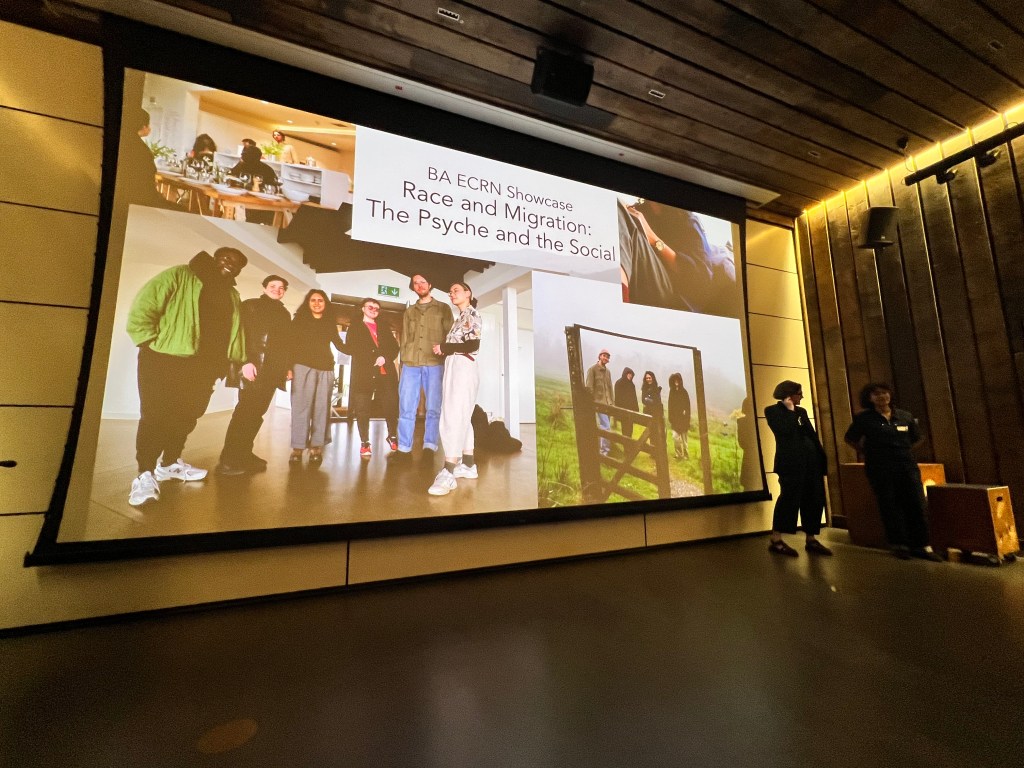
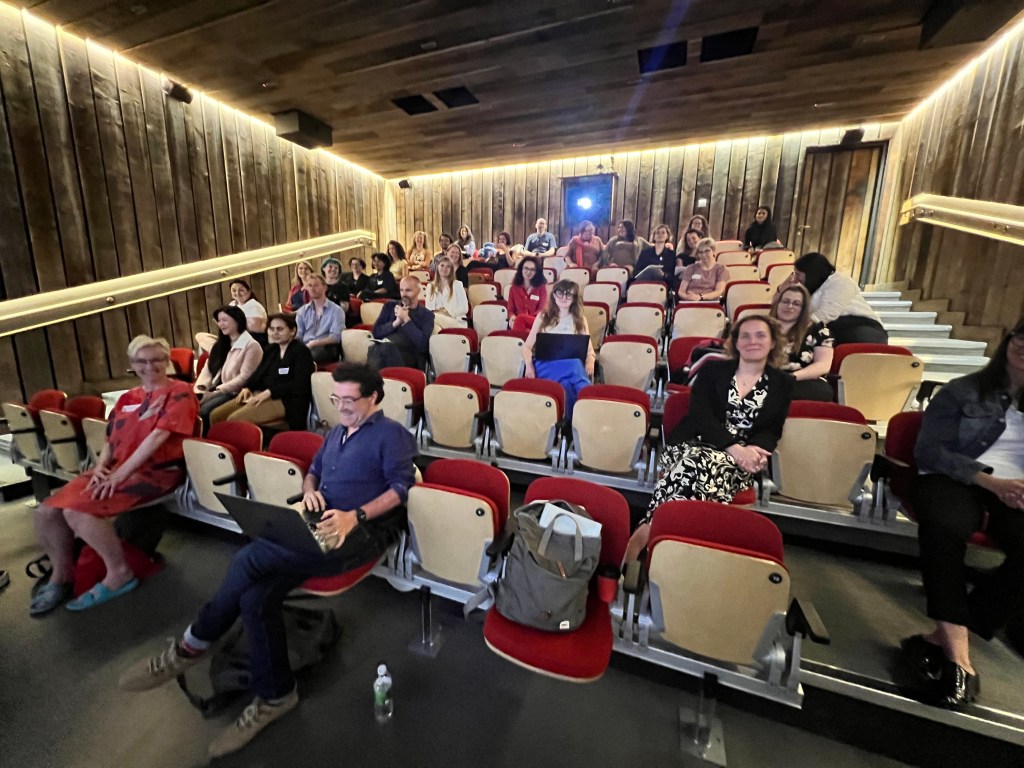


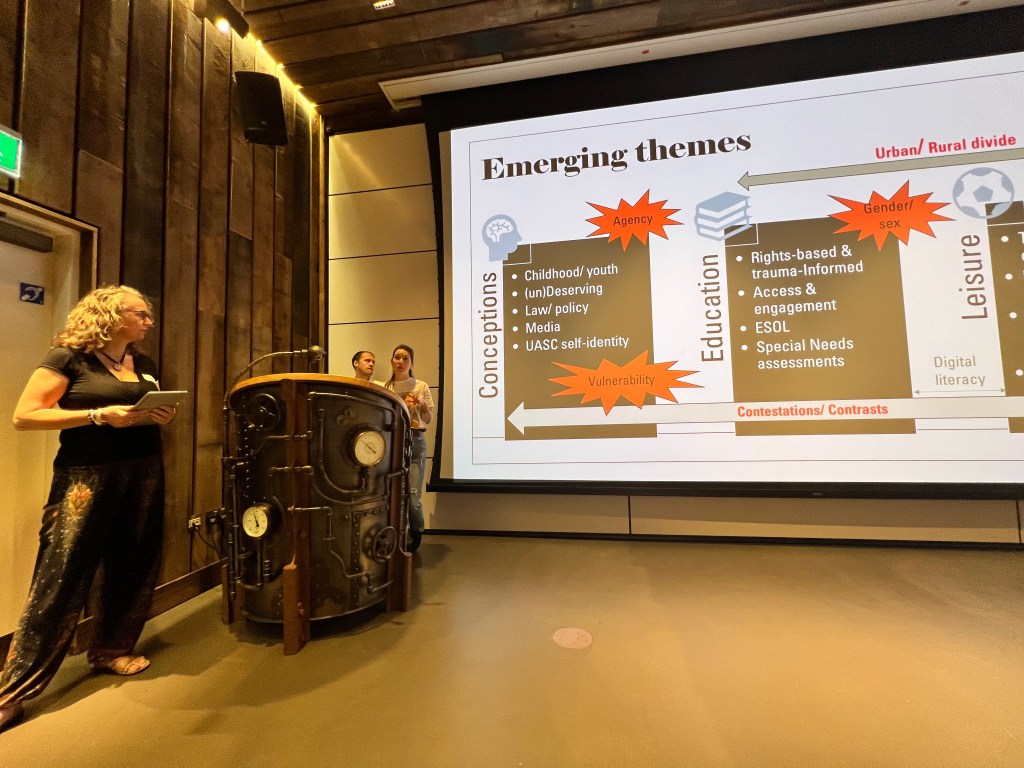


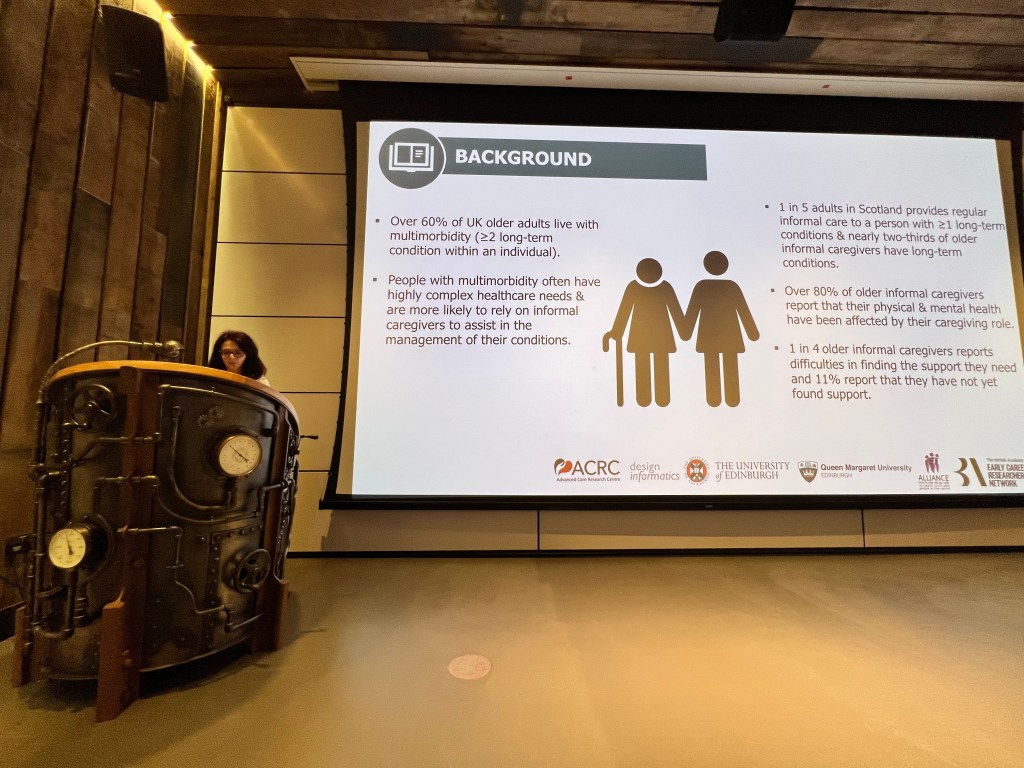

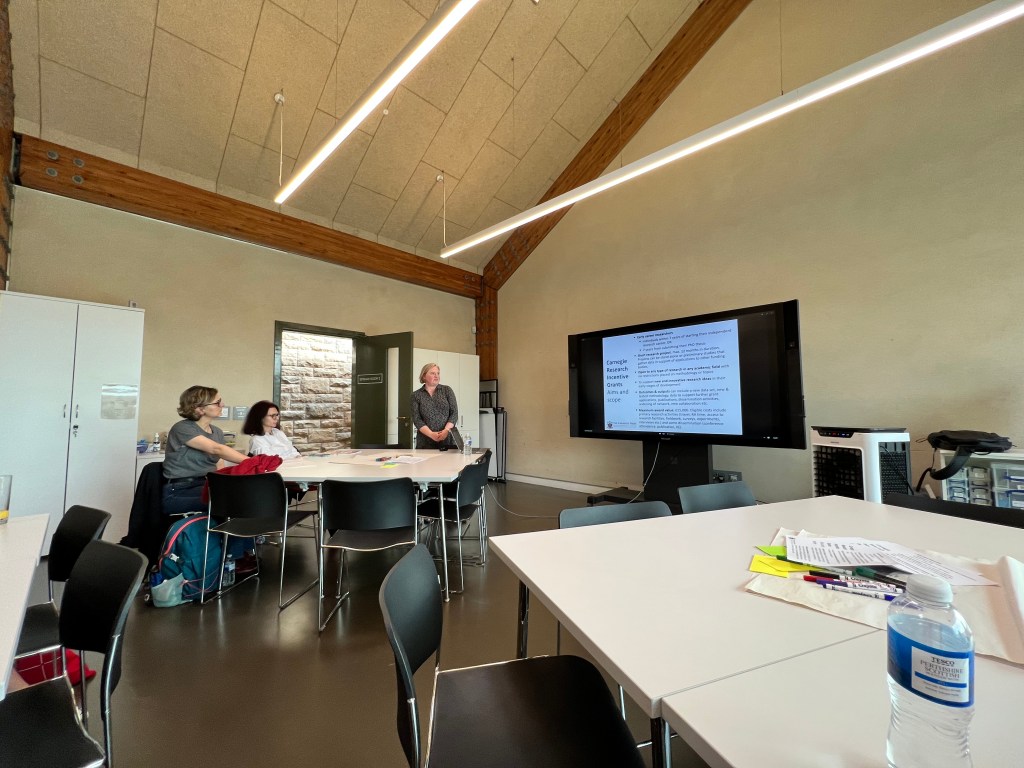




The Scotland Showcase event also included two workshops that were designed to help researchers learn how they can better engage with non-HEI partners – which utilised the first hand expertise held within those partner organisations: Getting Impact from Research Through Working in Partnership with Independent Research Organisations with Andrea Cop of National Museums Scotland and Ben Thomas of Historic Environment Scotland; and How to Succeed at Grant-writing with Patricia Krus of The Carnegie Trust. Due to the high level of success, and depth of learning they offered, these workshops enabled we are now planning follow-on sessions focused on impact, knowledge exchange, and developing grant reviewers’ skills.
Celebrating the BAECRN Scotland Hub’s successes
The Showcase was also a time to celebrate the wider successes of the network, as it comes to the end of its pilot phase.
In its first year, the BAECRN Scotland Hub accomplished rapid growth, achieving c.50% uptake across member institutions and attracting over 700 Network members. The Scotland Hub, which was the third pilot to launch after the South West and Midlands regional Hubs, already represents 27% of total UK Network membership.
There were also many Scotland Hub events over the last year, including the launch of a bi-monthly online What’s The Tea? initiative for sharing information with ECRs, community building, and supporting researchers to plan new activities. One of these was the Summer ‘Write-Along’, an online writing retreat held every weekday in July. Run online by an ECR-led team with support of the BA and myself, we welcomed a total of 148 attendees across the month. I want to thank the wonderful team who led the event, and who have formed the start of a great community of writing practice: Abigail McBain (Edinburgh) – who designed the structure of the event, Nicole Smith (Glasgow), Diana Valero (James Hutton Institute), Layla Adamson (Strathclyde), Andrea Ford (Edinburgh), Mila Dasklova (Glasgow), Pushpi Bagchi (Edinburgh), Ann Gillian Chu (Leeds), Laura Lebec (UWS), Julia Cussans (UHI), Christina Noble (James Hutton Institute), Niina Turtola (Edinburgh Napier).
Moreover, The British Academy also organised local events for the network, for example the Vitae: Careers Beyond Academia event hosted in Glasgow in June 2023.
Plus, the BAECRN Development Fund (supporting ECR-Led events across Scotland) also generated exceptional initiatives and events, including:
- Social Data Science Hub launch Christopher Barrie (University of Edinburgh)
- Global Queer and Trans Histories Beyond Academia Nick Mayhew (University of Glasgow) and Margarita Vaysman (University of St Andrews)
- Developing research partnerships to explore feasibility of establishing a specialist alcohol treatment service Scotland Andrea Mohan (University of Dundee) and Elisa Dimova (University of the West of Scotland)
- Nigeria-Scotland International Knowledge-Exchange: Sharing research and practice in arts and dementia Katey Warran, Research Fellow and Deputy Director of the Edinburgh Centre for Research on the Experience of Dementia and ECRN Member.
What will we achieve next?
Now that funding has been secured to roll out the network across the rest of the UK, we are excited to share our successes and practices to support new regions to engage. As noted above, Scotland has been a leader in recognising the value of independent scholarship and scholarship beyond HEIs, a model that The British Academy ECR Network plans to roll out, as it expands further.
Our team, led by the Universities of Glasgow and Stirling, is excited to work more closely with Scotland Hub Consortium Members to provide even more interdisciplinary development opportunities (including workshops, events, and another Seed Fund call that will have a particular focus on partnering with independent research organisations, charities, and industry). Consortium partners have additionally been encouraged to open up their institutional activities to Network members, allowing for equity of access to opportunities across Scotland, and further increasing the diverse and comprehensive programme of opportunities.
Our members at present are:

The Universities of Glasgow and Stirling are committed to supporting the development and professional prospects of their Research Staff as outlined in the Concordat to Support the Career Development of Researchers, and co-leading on the BAECRN is one of the many ways this is being implemented. Engagement with the BAECRN is a wonderful and proven way that all Scottish HEIs can fulfil their duty to (as the Concordat asks) “Provide researchers with opportunities, and time, to develop their research identity and broader leadership skills.” I am excited to announce the line-up of activities we have planned for year two. If you are an eligible researcher in the Arts, Humanities, or Social Sciences, please do join us here.
 The Auditorium: a research culture and researcher development blog
One thought on “Interdisciplinarity and Impact: Year 1 of The British Academy Early Career Researcher Network Scotland”