
Pathfinder Career Narratives is an ongoing series tracking the career choices and experiences of doctoral graduates. You can see all of the posts in the series here. You can find all of the Pathfinder resources and opportunities here. Today’s blog is written by Dr Julie Scanlon, Director of Executive Coaching and EDI Consultancy at Julie Scanlon Consultancy Ltd. You can find Dr Scanlon on LinkedIn here and at Julie Scanlon Consultancy here.
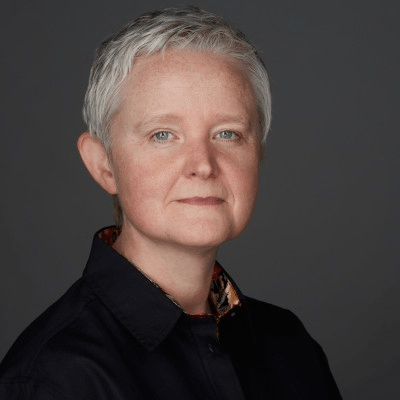
Name: Dr Julie Scanlon
Doctorate subject area and year of completion: English Literature – Contemporary Women’s Writing, 2002
Role and employer: Director, Julie Scanlon Consultancy Ltd
Approximate salary bracket of this type of role: Varied, dependent on the work you bring in!
After completing my PhD (by part-time study) at the University of Sheffield in 2002, I held two consecutive short-term teaching-only contracts at Lancaster University before moving to a permanent Lecturer role at Northumbria University in 2005. My role there was a combination of teaching, research and administration, progressing to Senior Lecturer. I left in 2017 and now work for myself as a consultant and trainer in diversity and inclusion and I am also an executive coach.
I didn’t fully know what I would do when I left. I probably had an inkling I’d like to work for myself but was perhaps a little scared to do so and had no idea how to do it! I prepared for the transition for about two or three years. In a practical sense, I volunteered as a trustee at two small charities that aligned with my values, which I found so rewarding. In those roles, I gained some broader strategic experience in another sector. I also became an associate with a local organisation offering LGBT awareness training. I took part in a group coaching programme which really helped me with the mindset shift required to make the leap (https://www.careershifters.org/career-change-launch-pad). The programme helped with my confidence, with finding my direction and taking practical steps.
I’d had a growing sense of unease in academia for many years before I left. Predominantly, it was a values clash – I was going in one direction and academia was going in another. The corporatisation and monetisation of the academic world (student fees, bid income), and research metrics, etc. were a long way from what I valued. The frame just wasn’t right for me any more. I was in my mid 40s and knew I could have a second career but felt that I ought to be getting on with it! I had another 20 or so years until I retired; the thought of that helped me any time I ‘wobbled’. I had thought I would be an academic for my whole career, though it wasn’t an intentional decision to enter academia; it was following my interests that had taken me there.
I knew working around inclusion resonated with my values as a feminist wanting to make a genuine difference in the world. I’d already undertaken a coaching qualification, as I knew I was interested in working with people’s development. A few months after leaving academia, I made the commitment to trying to work independently. Then, I was fortunate to find a part-time, temporary paid role early on as an Athena SWAN Manager, which helped me build skills and supported me while I built up my independent work separately.
As I transitioned, there was a lot of ‘identity’ level work to do. ‘I am an academic’ is a powerful identity hook that I was letting go of and stepping into the unknown of ‘I am a [what??]’ was unsettling. I had to let go of the known, which wasn’t making me happy, and embrace the unknown. As a person who is risk-averse, this was not easy. But the known risk of staying was unhappiness, dissatisfaction and feeling stuck; the unknown risk offered at least a possibility of something more positive. I had some one-to-one coaching and my coach asked what it would feel like not to be in academia and my immediate response was ‘I would be free’. ‘Free’ is a very powerful and telling word, which surprised me!
My work now is very varied. I love the stimulation and learning that comes with working with different groups/types of organisation and individuals. As a consultant, a client comes to you with a problem they want help with and you help design the right solution for them and deliver it. In this way, I use my (academic) analytical skills all the time as well as designing learning programmes or sessions to support understanding of inclusion. Some of my consultancy projects include qualitative research, which again is a skill I transfer over from my research experience. People skills are vital – being able to listen and understand what people really want, what their real problems are and to build rapport and trust quickly in a working relationship.
I see my current work as an extension and broadening out of my research and teaching from my academic life. In terms of content, my interest in gender and sexual orientation can be traced back to my undergraduate as well as postgraduate work, then in my research and teaching areas. My academic interests in theory helped me consider problems and issues analytically from a range of 360 degree approaches and perspectives. It also taught me to be critically analytical. Looking for the loophole and ‘defending’ my own approach in my research was part of being an academic. These skills are the same ones I use now in my consultancy work.
One of the surprises for me when I was starting out for myself was the generosity of people in sharing their thoughts and advice and their networks with me. I am so thankful for their support, which is ongoing and growing. It gave me a great sense of validation to hear others’ perspectives on what I could offer – people were impressed that I had done a PhD and been an academic. It gives you a credibility which in academia I think we are too ready to dismiss, in part because the messaging in academia is always that you need to be doing more – more research, ‘better’ research, having more ‘impact’, great teaching evaluations, etc.
I would encourage anyone exploring a new direction to have conversations with people in that sector/role. Start with your own networks, then your friends’ networks. Then get a bit braver and use LinkedIn or checking out people on their company websites and ask for a bit of time for a virtual coffee. Some people will not respond but for those that do, it will give you great insight into what their career/sector is like. You may be surprised how generous people are.
 The Auditorium: a research culture and researcher development blog
One thought on “Pathfinder Career Narratives 10: Director of Executive Coaching and EDI Consultancy”