
By Research Culture & Researcher Development Team colleagues Rachel Eager (PGR Communications Intern), Elaine Gourlay (Research Culture Specialist for Communities and Collegiality) and Paola Alarcon Lopez (PGR Intern for Communities).
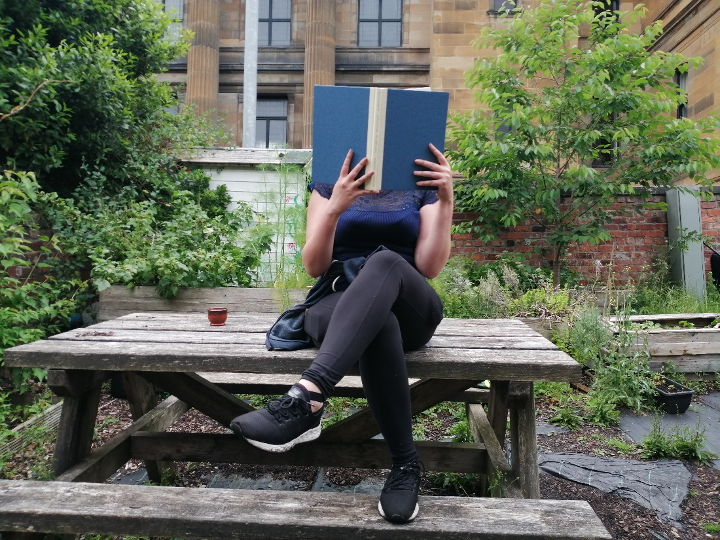
The importance of communities and networks for PGR learning and social support is well recognised. Feeling part of a supportive researcher community enhances the doctoral experience, reduces non-completion, and mitigates against burnout, amongst other clear benefits – it is increasingly considered an essential part of the professional development of researchers. When thinking about what ‘community’ means, though, we need to take a step back and widen the scope of understanding.
The ‘researcher community’ is a label that unintentionally risks narrowing our field of view. Thinking of researchers only as researchers leans into the misconception that the value of communities is one that should centre primarily around their research. But researchers are more than the work that they do. A researcher is a whole person, no matter their discipline, background, or home-life situation. They all juggle personal, professional, emotional, and financial achievements and burdens in addition to their research. In light of this, the Research Culture and Researcher Development team have been thinking about where PGRs can find opportunities for shared community which model time away from scholarly expectations.
Creating non-academic spaces
The University of Glasgow, like many others, has a fluid cohort of PGRs, with varying amounts of time available beyond their research and life obligations to contribute to building and maintaining a thriving community. Competing and clashing commitments means we can’t expect all PGRs to regularly be at the same event or activity, every week. So how do we manage a fluctuating group of ever-changing people while trying to build relationships and community?
One solution is to create flexible and constantly evolving spaces to connect that always allow for both high and low turnout. These spaces have to be prepared for those that want to drop in and out for short periods, as well as for those who want to spend longer. And they’re not always at a fixed time but offer an ‘on demand’ community feel. Creating a feeling of stability is key in conceptualising these spaces. A static space that is always available can be relied on as a place of belonging for itinerant PGRs.
We have created two such flexible spaces: a PGR Bookshelf and a PGR Garden. The Bookshelf is always in the same place so PGRs can come and choose a non-academic (!) book to enjoy, on a schedule that suits them. The Garden has weekly synchronous events for making community with others but is also a space where PGRs may drop-in any time, to enjoy lunch, or a break, in a quiet outdoor space.
The PGR Bookshelf
The PGR Bookshelf is simply put, a bookcase in The Gilchrist Postgraduate Club. Following the ‘bookswap’ model, which SarahBelle Selig (2022) calls “a balm for loneliness”, PGRs can take a book, drop off any they’ve read, and sit and have a coffee, and a break, with their new read. While there is the opportunity to exchange a book, there is no obligation. The only rule is that no textbooks or academic texts are allowed.
This space is always there – aligned with the opening hours of the cafe – and caters to our campus-located PGRs. It adds another dimension to the things that researchers have in common. There is the chance to forge real – if unseen – connections in the exchange of non-academic books that researchers have enjoyed and gifted to others. Reading a book has also been shown to reduce stress by up to 68%. In line with the UofG PGR Code of Practice the bookshelf is an opportunity to take a break. A small contribution towards encouraging researchers to resist academic overwork culture, by . #TakeBreaksMakeBreakthroughs!
The PGR Garden
The gardening group meets at Viewfield Lane every Wednesday from 5-7 pm. It is a time to be outdoors, share in nature, and to do manual activities together. The garden is generous in size, and divided into compartments where vegetables, fruits, herbs and flowers are grown. It is a community space, so at harvest time PGRs can take what they want from the harvests, in the spirit of sharing with each other.
Paola, our PGR Intern for Communities, hosts the weekly gardening sessions, but philosophically the garden is collectively constructed. Community members suggest different activities or projects, such as planting fruits and vegetables (recently cherries and chilies) and wildflowers from Scotland. Additionally, there are tasks related to conservation of the space, such as repairing planters, weeding, fighting mildew and so on. A key principle of this space is that it is inclusive and welcoming to PGRs with any level of gardening experience, including none at all. It also seeks to forge a dedicated place where international students, in particular, can bring and exchange their cultural knowledge about working with the land and their relationship with nature.
Community without the classroom
The PGR experience is entirely different to previous workplace or learning, enjoying far fewer synchronous moments of structured peer-connection and fewer rhythms that enable PGRs to compare notes, understand norms, and to track how far along their doctoral journey they are. The importance of community building in both academic and non-academic, more social and holistic, spaces cannot be understated for these cohorts who lack the ‘classroom’ structures of undergraduate or PGT study.
Communities are not the places or events that people attend. They are the people and relationships that grow organically to meet shared needs for feelings of belonging and care (Chavis and Lee, 2015). Institutions cannot create these feelings, but they can create contexts and environments for communities to form. The PGR Bookshelf and Garden offer the opportunity to bring likeminded people together. Even if individuals don’t enjoy gardening per se, they can enjoy the space, taking a seat in the fresh air and meeting new people.
Moving forward we recognise that we would like to expand these opportunities for community building to off-campus PGRs. For example, supporting those who study at a distance, who study part time, around other commitments, who are on fieldwork or placements, and those who have moved to a more financially tenable situation, whilst they complete their studies. We intend to combine existing communities such as our Late Career Early Career Researcher Network, and new ideas (such as an e-book swap, social media sharing of our spaces for rest and relaxation), to support this.
Overall, it isn’t important what the activity is – it’s about creating a welcoming space where PGRs feel comfortable to be themselves, to share their experiences and to share enough about themselves to form a community and friendship with fellow PGRs. A steady space where PGRs feel that they can belong to and take a part in is how communities are built – not just inside the lab, library, or seminar room.
 The Auditorium: a research culture and researcher development blog
One thought on “The importance of non-academic spaces in community building”