
Pathfinder Career Narratives is an ongoing series tracking the career choices and experiences of doctoral graduates. You can see all of the posts in the series here. You can find all of the Pathfinder resources and opportunities here. Today’s blog is written by Dr Billy Bryan, Research Leader at RAND Europe. You can find Dr Bryan on LinkedIn here or on the RAND Europe webpage here.
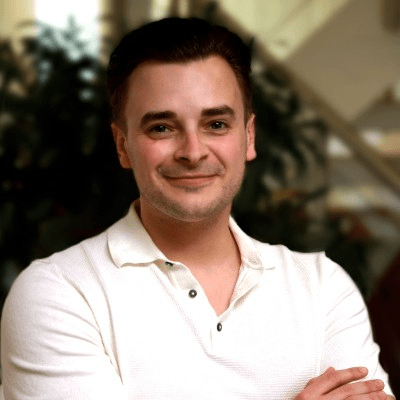
Name: Billy Bryan
Doctorate subject area, and year of completion: Medical Education, 2017
Role and employer: Research Leader, RAND Europe
Approximate salary bracket of this type of role: Undisclosed due to company policy
I began university study at Sheffield Hallam University in 2011, studying exercise science. As much as I enjoyed learning about biomechanics and sports psychology, I could not see a career as a sports scientist for myself. I got a job during my second year as a student researcher, where I fell in love with the research process, its rigour and creativity. In my third year, I applied for and secured a place across the road from the University of Sheffield Medical School in 2014 to study for a doctorate in medical education. This was a significant turning point in my life, opening up a whole new set of life chances I had not thought were possible for someone with my background.
I struggled in my first year. I felt the gap in research knowledge that a masters degree would have given me. I managed to pull through after a lot of support and mentorship by my excellent supervisors, and launched my study on self-regulated learning in medical students transitioning to the clinical environment from classroom study. I gained a full raft of skills that I still use every day, including interviews, surveys, systematic review, statistical methods, focus groups, negotiation and project planning.
I realised early on in my studies that I preferred working on multiple projects at once in very different areas, and felt supported to do so by my supervisors. I began researching the value of the doctorate with Dr Kay Guccione in my second year, became a trustee of the students’ union, and worked as a careers advisor at the university, alongside many other small roles, including getting involved in a science policy group. It was these experiences that got me thinking about careers beyond academia.
I hosted one science policy event and met a consultant, who then became (and remains) my mentor. I discovered that policy consultancy combined my interests in science policy and would allow me to work on multiple projects at once. With their help (via their network), I secured my first post-PhD job immediately after completing my PhD in 2017, after spending the final 6 months furiously applying for many policy consulting roles. The university researcher developers were vital in helping me through this process, with many mock interviews and CV reviews.
I started working as a policy consultant at Technopolis Group UK in late 2017, then being promoted to senior consultant in 2020. I led projects on a wide range of topics, including on renewable energy technologies (EVs, smart-home tech to reduce bills), international development programmes (visiting Kenya and Uganda), assessing the research –response to COVID-19 (including case studies on the Oxford-AstraZeneca vaccine), as well as writing proposals to win contracts. I brought all the research methods from my PhD and began honing my own management and people development style.
I joined RAND Europe in mid-2022, after almost five years at Technopolis. I am an Evaluation and Research Leader, a step up for me into what you might call ‘senior management’. I now lead large cross-disciplinary teams of researchers on major projects for the UK Space Agency, UK Research and Innovation, European Commission, contributing to the policy conversation in green energy (nuclear tech), space (earth observation) and researcher careers, to name a few. I lead training internally, spend time cultivating relationships with partners and funders, and sit on a government panel for evaluation.
I have felt that my PhD has been valued by both of my employers. Indeed, having it meant that I was able to start in a higher position than I otherwise would have without a doctorate. Each company prides itself on the number of doctorate-holders it employs, not least because our clients also value our in-depth expertise and robust research skills. There is a range of advanced research training on offer at RAND, one course of which I deliver, meaning I am not short of opportunities to deepen my methods knowledge, or learn something completely new e.g. our futures and foresight methodologies.
My biggest issue in transitioning from my PhD into work was my approach to writing. I struggled to write in a concise and message-led way, despite having practiced this through blogging and writing for the media during my PhD. I had a lot of opportunity to practice and improve this, with all the report writing across projects. There was significant support from my managers who, themselves PhDs, knew exactly how to coach me away from the longform academic style.
I remain interested and active in researching the value of the doctorate with Dr Guccione after we embarked on our first study in 2016. The need to understand how we can better prepare doctorate holders for the world of work is exemplified in the Pathfinder series found here. We need more examples of the wide variety of post-doctoral careers and a stronger commitment at all levels of doctoral education to equip graduates to pursue their next steps. I said as such in a recent call to action for a supply-chain style model of doctoral development in Nature.
The best advice I always give to current doctoral researchers interested in careers beyond academia is to talk to as many people in as many different careers as possible. In my final year, I would approach people on LinkedIn, company websites and university events (all very scary, but worth it!) and ask them about what their job was like; getting responses much like what I have written above. This is a little easier if you find an alumnus of your institution, but do not let that stop you if you don’t find one. You will be pleasantly surprised at who will give you their time. For me, it was high powered C-suite executives to entry level role holders, each account as valuable as the other. I have done the same for others myself, and remain willing to do so. Get in touch if you are interested in learning more about what I do, and whether it is for you.
Declaration of interests
The author declares the following competing interests: Dr Billy Bryan is currently serving as an Evaluation and Research Leader at RAND Europe; however, the views, opinions, findings, conclusions, and recommendations contained herein are the author’s alone and not those of RAND Europe or its research sponsors, clients, or grantors. He is also a trustee at the University of Sussex Students’ Union, a member of the UK Government’s Evaluation and Trial Advice Panel (ETAP), and an advisor at the Cardiovascular Research Trust.
 The Auditorium: a research culture and researcher development blog