
This is a Pathfinder Expert Voices post, by guest blogger Dr Sally Hancock, Senior Lecturer in Education at the University of York

Universities across the world are awarding more doctorates and many researchers are probably aware of what this means in career terms: most of them won’t have a full-time academic position. This outcome is often presented as a matter for concern. What is a doctorate if not an academic apprenticeship? And what of the surveys indicating that postgraduate researchers still seek academic employment above other sectors?
It’s certainly not my intention to dismiss the academic aspirations of researchers. I sought an academic career following my doctorate and highly value the varied and stimulating role of being a university lecturer. Yet I often wonder if the prioritising of academic careers is due, in part, to a lack of information about post-PhD pathways and an unhelpful division of ‘academic’ and ‘non-academic’ careers.
In my view, this binary perpetuates the assumption that careers outside of academia are ‘alternatives’ to the norm and somehow less prestigious. Furthermore, it completely conceals a verdant landscape of employment opportunities for researchers beyond academia – and particularly, the extent to which it is possible to forge a research career outside of academia.
Research careers beyond academia
In recent years, I have closely examined the data on the employment outcomes of PhD graduates in the UK. Doing so has taught me a lot about research career opportunities beyond academia, and how researchers can bring the benefits of their training to the wider economy.
While the majority of postgraduate researchers leave the higher education section in the years immediately following their doctorate, an often overlooked finding is that over half of those working outside academia are employed in a research role. This is defined as a job that involves the creation, application or dissemination of research, and requires doctorate-level research training.
Research role holders have job titles incorporating natural sciences, social sciences, medicine, psychology, biochemistry, information technology etc. The list is long and diverse. And on the whole, these individuals are very happy with their outcomes. As well as reporting higher median salaries than those working in the academic sector; a soon-to-published report from the same dataset showed that doctorate holders employed in research roles beyond academia reported the highest career satisfaction (over 95%!).
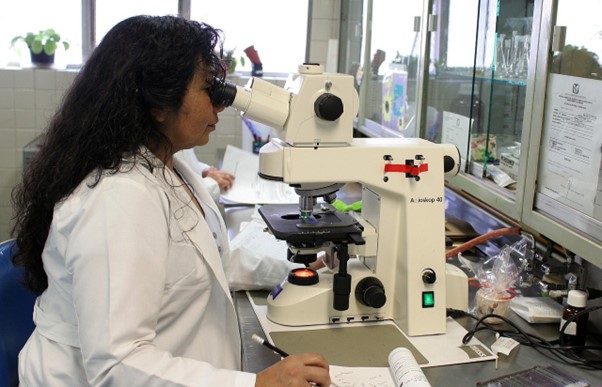
It is important to acknowledge that not all doctorate holders working outside of academia secured research employment. Many reported careers in education, management or business that did not involve research. The problem with the employment data currently collected is that it doesn’t tell us much about the reasons why doctorate holders undertake the jobs they do (however, the Pathfinder narratives series gets right to the heart of that insight). We just don’t know whether employees who do not engage with research in their work, are all disappointed with this outcome. Maybe you have some opinions on this, and those would be welcome in the comments.
It would be remiss though, not to mention that doctorate holders from scientific and technological fields report higher rates of research employment beyond academia than those from the arts, humanities and social sciences. Why might this be?
Preparing for a research career beyond academia
The differences observed between rates of research employment and field of doctorate study is likely to owe at least in part to economic factors – in other words, issues of supply and demand. However, there are many more doctorates awarded in the scientific and technological fields, and yet demand for the research training of these individuals remains high. The evidence on ‘over-education’ is not particularly persuasive, and I am wary of arguments to limit the number of doctorate holders in society.
A more constructive take on these differences is that doctoral holders from the scientific and technological fields may simply be better prepared for research employment opportunities beyond academia. There are a number of reasons why this explanation is compelling. Firstly, the emphasis on developing the employability and transferable skills of researchers began in the scientific and technological fields. So, this way of thinking about the doctorate and its wider value is simply longer established in the research culture of these subject areas.
Secondly, it is well documented that researchers in the arts, humanities and social sciences are less secure about articulating the wider value of their research training. This may mean that these doctorate holders don’t recognise the research connection of the work they are doing outside of academia, and that their employers also aren’t aware of how their research training translates to everyday tasks.
How then, can postgraduate researchers across all fields better position themselves for research employment opportunities beyond academia? Firstly, current data offer some insight into what research employers value. The doctorate qualification, and the subject knowledge and research training it represents, is certainly sought. However, a written thesis alone is unlikely to be sufficient to distinguish yourself in this context. Conference papers and academic outputs are similarly likely to have less currency beyond academia. Practical work experience acquired during or since the doctorate, however, is highly valued – especially when it involves research.
Taking some time during your doctorate to build networks with non-academic partners would therefore be time very well spent. Not only would this afford you a taste for the world of research beyond academia, there are several studies demonstrating that widening your network during the doctorate is associated with securing research employment in the future. Such experience will also enable a more informed choice about your future.
Furthermore, should they decide that an academic career is the best way forward, possessing contacts in industry, government or the third-sector will be hugely beneficial for realising impact for their research. The UK Research and Innovation Research Councils and Learned Societies have certainly now realised this, evident in their encouragement of researchers to undertake ‘research in practice’ placements, professional internships, and policy fellowships.
A final piece of advice: don’t expect your supervisor to have all the answers! Doctoral training has changed considerably in recent decades, and there is much more support now offered by institutions, such as the Pathfinder initiative at the University of Glasgow. A career in research is no longer limited to a career in academia, and your pathway forward will be unique to you.
 The Auditorium: a research culture and researcher development blog
One thought on “A career in research beyond academia? Opportunities for researchers outside of higher education”